Neslihan Atagül
A Luminous Force Between Continents Crafting Emotion, Identity & Enduring Connection in Global Storytelling
By Sofia Lava
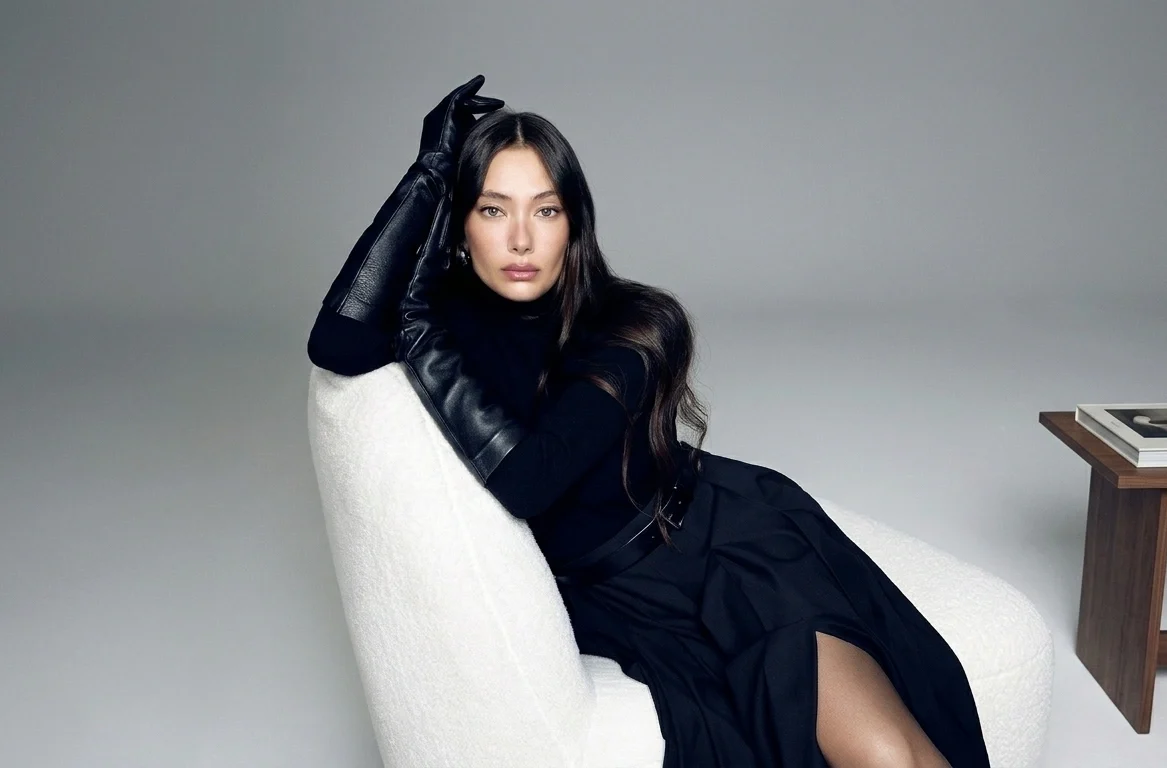
There is a particular kind of presence that transcends language, geography and even genre. It is not loud, nor overtly performative, but rather something deeply internal, almost instinctive. Neslihan Atagül possesses that presence. She is not simply one of Turkey’s most recognisable actresses. She is part of a cultural movement that has carried Turkish storytelling into living rooms across the world, reshaping how audiences perceive drama, romance and emotional intensity.
Born in Istanbul in 1992, Atagül’s life began in a city that has long existed as a bridge between worlds. Europe and Asia meet there not only geographically, but culturally and philosophically. That duality is mirrored in her own identity. With a Circassian father and a mother of Belarusian heritage, she grew up within a household that blended traditions, languages and histories.
This layered upbringing would later become one of her greatest artistic assets. Atagül does not act in a single register. She moves between emotional states with a sensitivity that suggests she understands contradiction as something natural rather than disruptive. There is often a quiet tension in her performances, a sense that beneath calm surfaces lie deeper currents.
Her journey into acting began unusually early. At just fourteen she appeared in the film İlk Aşk, earning recognition as a promising young performer. What might have been a fleeting debut instead became the foundation of a career built with unusual steadiness.
Television soon followed. Her role in the long running series Yaprak Dökümü introduced her to a national audience and gave her the kind of sustained exposure that shapes young actors. Unlike those who rise quickly and fade just as fast, Atagül’s progression was gradual. She absorbed the rhythms of television production, learned how to sustain a character over time, and developed the emotional discipline that would later define her most powerful roles.
Her breakthrough came with cinema. In 2012 she starred in Araf, a film that required a level of psychological intensity far beyond her years. The performance earned her international recognition and firmly placed her on the global radar.
What is striking about this moment is not merely the accolade itself, but what it represented. Turkish actors had long been celebrated within their own industry, yet global recognition remained relatively rare. Atagül’s success signalled a shift. It suggested that Turkish cinema and television were no longer confined to regional appreciation, but were becoming part of a broader global conversation.

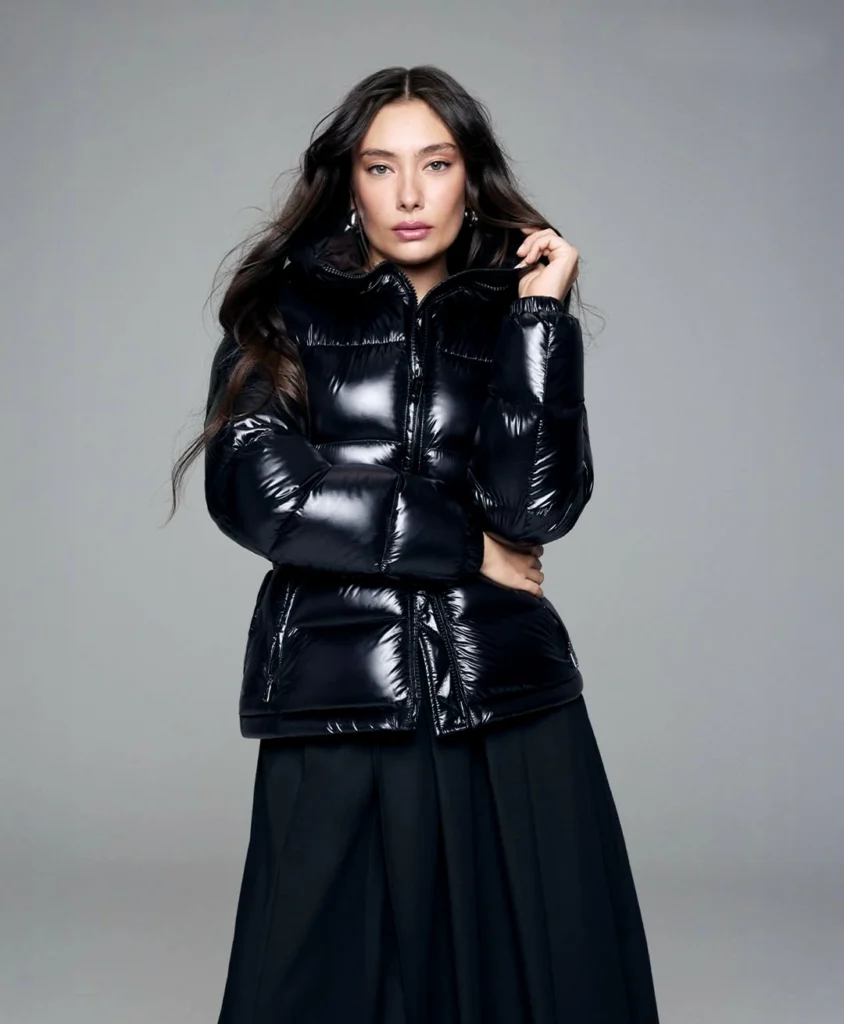
That transformation reached its fullest expression with Kara Sevda. Broadcast between 2015 and 2017, the series became a phenomenon, sold to more than one hundred countries and achieving international acclaim.
At the centre of this success was Atagül’s portrayal of Nihan, a character defined by emotional resilience and quiet defiance. She did not approach the role with melodrama. Instead she allowed stillness to carry meaning. In a genre often associated with heightened emotion, her restraint felt almost radical. Audiences across cultures responded not only to the story but to the authenticity she brought to it.
It is here that Atagül’s cultural significance becomes clear. Turkish dramas have found global audiences because they combine universal themes with a distinct emotional language. Love, family, sacrifice and loyalty are explored with an intensity that resonates beyond borders. Atagül has become one of the key faces of this movement, embodying its ability to connect deeply with viewers regardless of language.
Her subsequent work continued to expand that influence. In Sefirin Kızı, she portrayed Nare, a character shaped by trauma, separation and enduring love. The role demanded both strength and vulnerability, and Atagül delivered a performance that was both raw and controlled.
Yet the production also revealed another aspect of her life rarely discussed in the glamour of celebrity. During the series she faced significant health challenges, eventually stepping away from the project.
For many actors such a moment might have signalled a pause or even a decline. For Atagül it became something else entirely. It exposed her willingness to prioritise personal wellbeing over professional momentum, a decision that reflects a broader shift within contemporary culture. The idea that success must come at any cost is increasingly being questioned, and Atagül’s choice placed her within a generation of artists redefining what longevity means.
Her return to the screen in later projects reaffirmed her place at the centre of the industry. Roles in series such as Gecenin Ucunda demonstrated a continued interest in complex female characters navigating emotional and societal constraints.
Beyond her work on screen, Atagül’s life carries a quieter narrative. In 2016 she married actor Kadir Doğulu, her co star from Fatih Harbiye. Their relationship, formed within the shared intensity of performance, has become one of the more enduring partnerships in Turkish entertainment.
In 2025 the couple welcomed their first child, marking a new chapter that inevitably reshapes both personal and professional priorities.
Motherhood, in particular, introduces a different dimension to an actor’s life. It alters time, perspective and emotional awareness. For someone like Atagül, whose performances already draw on subtle emotional currents, this shift may well deepen the complexity of her future work.
Off camera she maintains a life that appears deliberately grounded. Unlike the hyper visibility often associated with global fame, Atagül’s public persona retains an element of privacy. Her social media presence offers glimpses rather than full access. Moments of travel, fashion and everyday life are shared with a sense of curation rather than exposure.
Fashion itself plays a significant role in her identity. Before fully committing to acting, she worked as a model, appearing in campaigns for international brands.
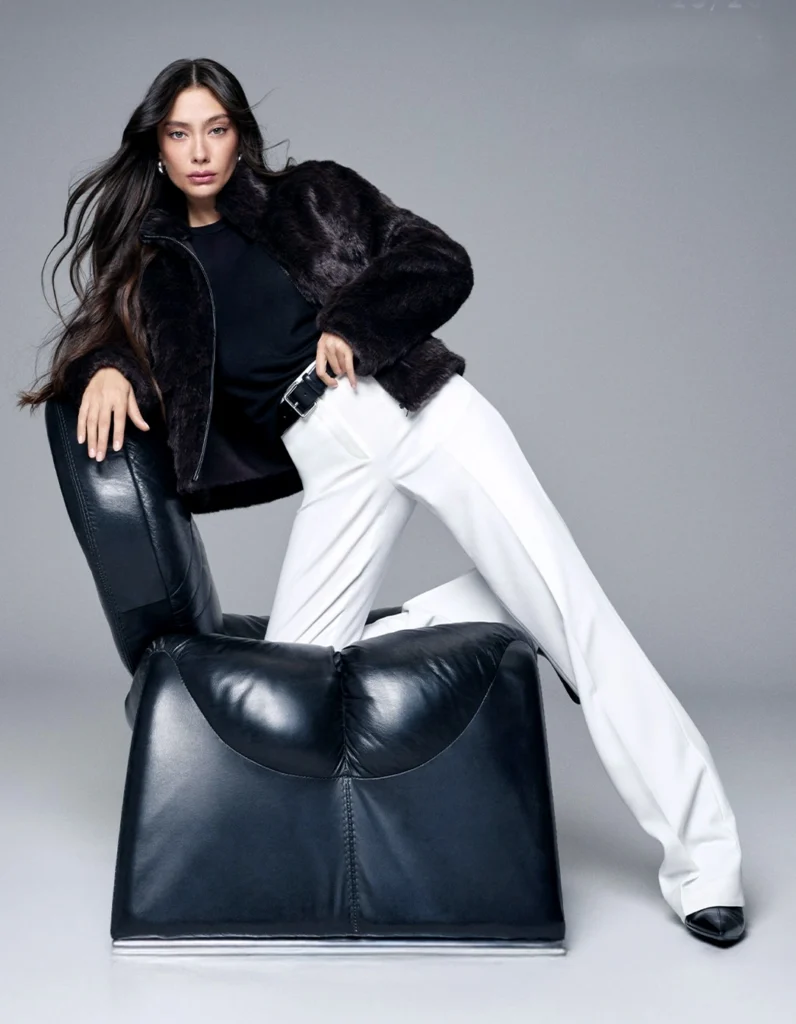
This background is evident in the way she presents herself. Her style is not simply about aesthetics but about narrative. Whether in editorial shoots or public appearances, she uses clothing as a language through which identity is expressed. It is a continuation of the same instinct that guides her acting. Both are forms of storytelling, shaped through visual and emotional detail.
There is also an intellectual curiosity that underpins her choices. Having studied theatre formally, Atagül approaches acting with an understanding of structure and technique. She is not merely intuitive. She is analytical. This combination allows her to inhabit characters fully while maintaining control over the craft itself.
Looking ahead, the trajectory of her career suggests a continued expansion beyond traditional boundaries. Turkish drama has already established a strong presence in Europe, the Middle East and Latin America. The next phase may well involve deeper collaboration with international platforms and productions.
Atagül is particularly well positioned for this evolution. Her multicultural background, combined with her ability to convey emotion with minimal reliance on language, makes her a natural candidate for cross cultural storytelling. In an era where streaming services are dissolving geographic barriers, actors who can move between audiences will define the future of global entertainment.
There is also the possibility of a renewed focus on cinema. Film offers a different canvas, one that allows for greater psychological depth and artistic experimentation. Given her earlier success in that medium, it would not be surprising to see her return with projects that challenge both audience expectations and her own artistic boundaries.
What remains constant, however, is the quality that first set her apart. Neslihan Atagül does not perform for spectacle. She performs for connection. Her characters feel lived rather than constructed, shaped by internal logic rather than external display.
In a world increasingly driven by speed and visibility, her approach feels almost deliberate in its restraint. She allows moments to breathe. She trusts silence. She understands that the most powerful emotions are often those that remain just beneath the surface.
It is this understanding that has carried her from a young actress in Istanbul to a global figure within contemporary drama. Not through noise, but through nuance. Not through excess, but through precision.
As Turkish storytelling continues to evolve and expand its reach, Atagül stands as one of its most compelling interpreters. A figure who moves between cultures with ease, carrying with her the quiet intensity of stories that resonate far beyond their origins.