
The Disappearing Self: How Technology Is Editing Our Identity
We’ve become the curators of our own existence. But somewhere between the person we perform online and the person we actually are, the real self is quietly disappearing.
By Ami Jain

I have three versions of myself living online right now. There’s the professional version on LinkedIn, articulate and accomplished. There’s the creative version on Instagram, aesthetic and aspirational. There’s the casual version on WhatsApp, witty and warm with close friends. Each one is me. None of them is fully me. And increasingly, I’m not sure which version is closest to whoever I actually am anymore.
There was a time when identity was something we discovered slowly, through childhood memories, family stories, friendships, heartbreaks, the messy trial-and-error of becoming a person. Who we were felt organic, uncurated, shaped by lived experiences we couldn’t control.
But today, identity is no longer something we find. It’s something we construct, optimize, polish, filter, export, and upload. The self has become editable. And every app we use, every algorithm we interact with, every piece of content we consume quietly rearranges us.
We are evolving not in private, but under the influence of digital ecosystems designed to shape us with frightening precision. And somewhere between the profiles we create and the people we truly are, the real self is quietly disappearing.
When Algorithms Became the Architects of Personality
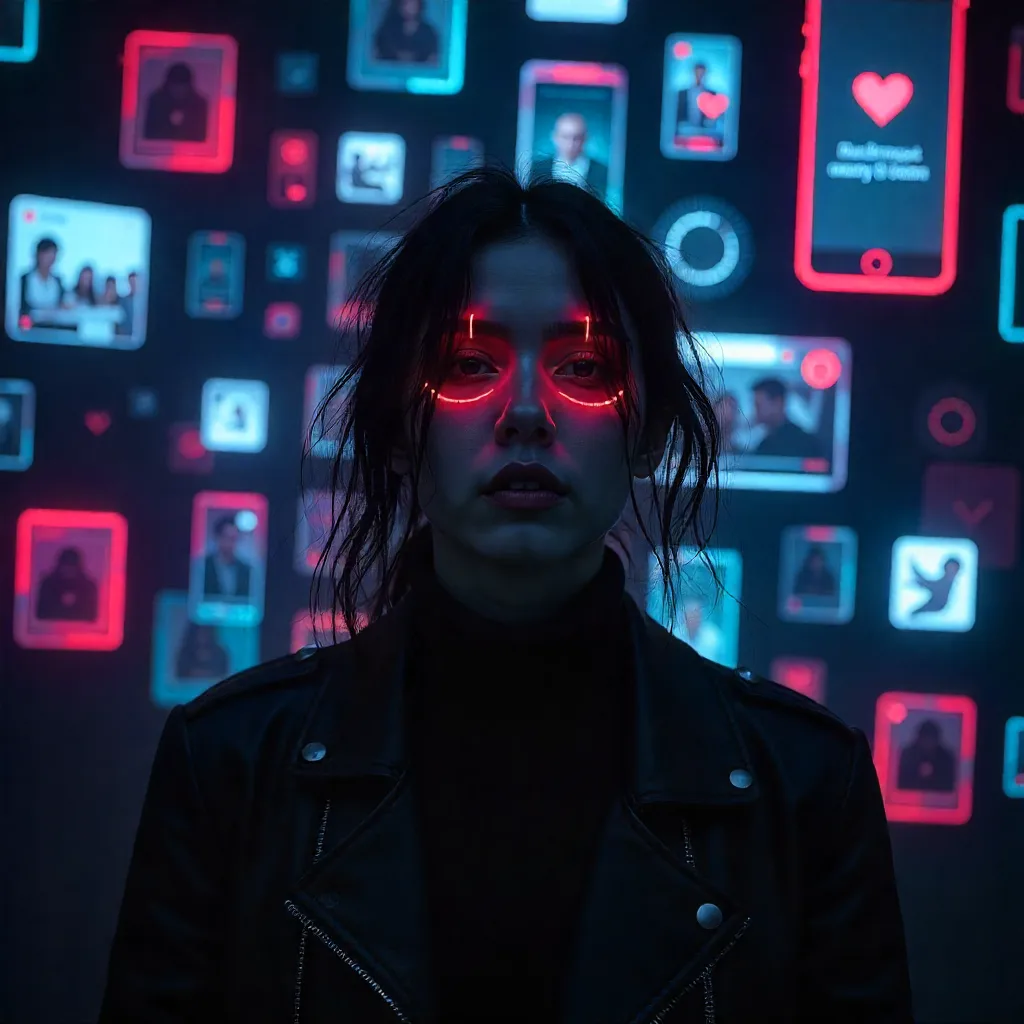
Every scroll is a subtle reprogramming. Every “For You” page is a mirror, not of who we are, but of who the algorithm decides we might become.
TikTok teaches us how to dress, what music to like, and which aesthetics to adopt. Instagram teaches us how to feel about our bodies, our relationships, and our lives. Pinterest curates our aspirations before we’ve articulated them ourselves. AI apps teach us how to write, speak, and create, their suggestions slowly replacing our natural voice.
We don’t choose our tastes anymore. They’re recommended. We don’t choose our desires. They’re targeted. We don’t choose our aesthetics. They’re fed to us until they feel like our own.
Identity has turned into an AI-assisted collaboration. And in this partnership, the human half is losing creative control.
Dr. Tariq Al-Mansoor, a digital psychology researcher at Zayed University who studies technology’s impact on identity formation, has been tracking this shift. “Previous generations formed identity through physical communities, family traditions, local culture. Today’s generation forms identity through digital curation. The difference is profound. Physical identity formation happened through lived experience. Digital identity formation happens through algorithmic suggestion. You’re not discovering who you are. You’re being told who you could be, and then performing that until it feels real.”
His research, published in the Journal of Digital Culture in 2024, examined how social media algorithms influence personality traits in young adults. The findings were stark: participants showed measurable shifts in self-reported values, interests, and even personality characteristics after just six months of heavy algorithm-driven content consumption.
“The self is becoming externally authored,” Dr. Al-Mansoor explains. “And most people don’t even realize it’s happening.”
The Self as Performance Art
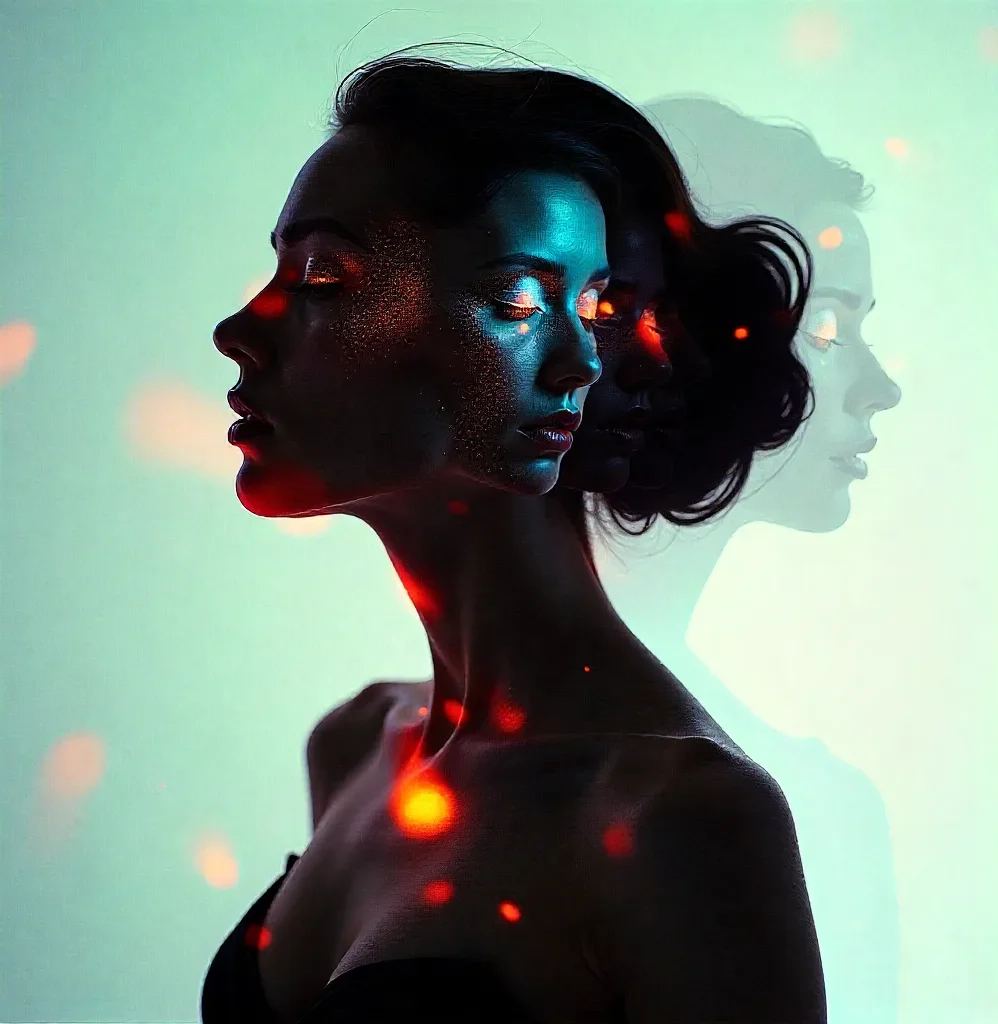
We have become editors of our own existence. And the editing never stops.
We edit our face with filters until our unfiltered reflection looks wrong. We edit our opinions based on what’s trending, what’s acceptable, what will get engagement. We edit our personalities depending on the platform, the audience, the context. We edit our emotions so they’re digestible, shareable, appropriate for public consumption. We edit our life stories for aesthetic coherence, removing the messy parts that don’t fit the narrative.
The modern self is not a soul. It’s a feed.
This performance imperative has become so normalized that authentic, unpolished self-expression now feels radical.
Posting without a filter feels vulnerable. Sharing an unflattering angle feels brave. Admitting confusion or failure feels dangerous.
We no longer ask “Who am I?” We ask, “Who do I look like?” “Who do they expect me to be?” “Which version of me performs well?” Identity has stopped being discovered. It has become a design.
Dr. Laila Hassan, a cultural anthropologist at the American University of Sharjah, frames this as “performative selfhood.” She’s studied how digital platforms have restructured identity construction across the Gulf region. “In cultures where public image has always mattered, digital platforms intensify that pressure exponentially. You’re not just managing your reputation in your immediate community anymore. You’re managing it in front of potentially millions. The self becomes a brand. And brands require constant maintenance, optimization, and strategic presentation.”
Her interviews with young people in the UAE revealed a common theme: exhaustion. The exhaustion of curating, performing, and optimizing. The exhaustion of being so many versions of yourself that you lose track of which one is real.
When Memory Moved to the Cloud
Our memories no longer live inside us. They live in cloud storage, camera rolls, Instagram archives, digital photo albums sorted by facial recognition software we didn’t ask for.
We don’t remember moments. We revisit them through photos and videos we took instead of experiencing fully. We don’t feel nostalgia. We rewatch it, scrolling through our own documented past. We don’t hold memories in our minds. We scroll through them on screens.
Technology hasn’t just changed what we remember. It has changed how we remember. And with every saved album, archived chat, deleted photo, and edited story, we sculpt our own mythology. Not based on truth, but on presentation. This is a memory as an editing suite. We cut the unflattering takes, keep the highlight reel, and slowly our relationship with our own history changes.

We remember our lives not as they were lived, but as they were documented and curated.
Dr. Noor Khalifa, a neuroscientist at Khalifa University studying memory and technology, explains the cognitive impact. “When you experience something while simultaneously documenting it for sharing, your brain processes it differently. You’re encoding it not just as memory, but as content. This creates what we call ‘experience distancing,’ where you’re simultaneously living and observing your life. Over time, this can impair authentic memory formation. People remember the documentation better than the actual experience.”
We have become the curators of our personal museums. But what happens when the museum becomes more vivid than the life it’s supposed to represent?
The Mask That Became the Face
The more we perform, the harder it becomes to return to the unedited self. Because performance is addicting. Because acceptance feels like love. Because visibility feels like meaning. Because portraying a version of yourself becomes easier than revealing the truth.
We are so used to showing curated versions that we no longer know how to access the original. Or worse, we’re afraid there’s nothing original left.
Sana, 21, describes hitting this realization. “I went through a breakup and wanted to tell people what I was really feeling. But I couldn’t find the words because I’d spent so long only expressing ‘Instagram-appropriate’ emotions. I’d trained myself to always frame things positively, always find the lesson, always show resilience. I’d lost access to messiness. I didn’t know how to be genuinely sad anymore without also performing recovery.”
This is the hidden cost of constant curation. We don’t just edit our presentation to others. We edit our internal experience of ourselves. The mask doesn’t just hide the face. Eventually, it becomes the face.
Dr. Al-Mansoor sees this in his clinical work regularly. “Clients will say ‘I don’t know who I am anymore’ and mean it literally. They’ve performed so many versions of themselves across so many platforms that they’ve lost their center. The curated self has colonized the authentic self. And finding your way back requires actively unlearning all the performance patterns you’ve developed.”
Dubai: The City of Infinite Reinvention
Dubai is the perfect symbol of this age. A place where identity is fluid, self-made, and aspirational. A city built on reinvention rather than heritage, where everyone can arrive anonymous and emerge reborn.
Walk through Dubai Marina or Downtown, and you see it everywhere. People crafting new identities, new narratives, new versions of themselves. The Indian tech worker reborn as an entrepreneur. The European creative reinvented as a luxury consultant. The Emirati student is experimenting with global identities while maintaining cultural roots.
This is the promise of modernity: you can be whoever you choose. No history required. No predetermined path. Just pure potential and strategic self-creation.
But the freedom to constantly become someone new carries a shadow. If identity is infinitely fluid, does it ever become real? If we are always reinventing, do we ever arrive? If every version is possible, do any of them feel true?
The Exhaustion of Infinite Becoming
The world tells us we can be anyone. The algorithm tells us who to try next. Culture tells us to evolve constantly, adapt relentlessly, and optimize endlessly.
But no one teaches us how to stay. To stay with our flaws. To stay with our unfiltered face. To stay with our unpopular opinions. To stay with our hidden desires that don’t align with current aesthetics. To stay with the versions of us that don’t get engagement, don’t trend, don’t perform well.
This is the exhaustion I hear in almost every conversation with people my age. Not the exhaustion of doing too much. The exhaustion of being around too many people. Of code-switching across platforms. Of maintaining multiple personas. Of never letting the performance drop.
Identity today is not disappearing because we lost ourselves. It’s disappearing because we’re afraid to sit still long enough to find ourselves. Because stillness doesn’t generate content. Because consistency doesn’t adapt to trends. Because being one thing means saying no to performing all the other things we could be.
The Quiet Rebellion
But beneath all the noise, a quiet rebellion is rising. And I see it in small ways, every day.
People turning off read receipts and removing last-seen timestamps, reclaiming privacy in communication. People archiving their entire Instagram history, choosing to start fresh or stop performing altogether. People posting less, sharing selectively, protecting their actual lives from public documentation.
Dr. Hassan sees this as an emerging trend, particularly among slightly older Gen-Z and young millennials. “There’s a growing awareness that the curated self is unsustainable. People are reaching a breaking point with performance culture. The next evolution won’t be better curation. It will be less curation. The rebellion is opting out.”
Finding the Original File
So how do we find our way back? How do we locate the self beneath all the edits?
I don’t have complete answers, but I have clues from my own fumbling attempts:
Spend time offline without documenting it. Go somewhere you won’t photograph. Have experiences you won’t share. Let memories live only in your mind, unedited and unarchived.
Notice when you’re performing. Catch yourself code-switching, curating, optimizing. Don’t judge it. Just notice. Awareness is the first step to choice.
Ask uncomfortable questions. Which of my interests are actually mine versus algorithmically suggested? Which opinions would I hold if no one were watching? What do I want that I’ve never posted about?
Reduce decision points. Every platform where you exist is another version to maintain. Consider reducing your digital footprint deliberately. Fewer profiles, fewer performances.
Create without sharing. Write for yourself. Make art no one will see. Think thoughts you don’t publish. Let your internal life become richer than your external presentation.
Seek mirrors in humans, not metrics. Let trusted people reflect yourself back to you. Their messy, incomplete, affectionate perception of who you are is more real than any engagement analytics.
The next era of identity won’t be about aesthetics or algorithms. It will be about alignment. Not “How do I appear?” but “What feels true?” Not “Who should I be next?” but “Who was I before the world told me?” Not “What version of me performs well?” but “What version of me feels like home?”
The Self Is Not Lost, Just Hidden
Identity is not disappearing. It’s retreating, waiting for us to look up from our screens long enough to recognize it.
The real you exists. Not in any profile, not in any performance, not in any carefully curated feed. The real you is in the moments you don’t document. In the thoughts you don’t polish. In the feelings you don’t filter.
The real you is in the preferences that don’t make sense to anyone else. In the contradictions that mess up your aesthetic. In the private joys that wouldn’t get engagement. In the version of yourself that exists when absolutely no one is watching.
Technology hasn’t killed the self. But it has given us so many ways to avoid meeting it. And maybe the most radical act in our current moment isn’t better curation. It’s stopping the curation entirely. Logging off. Sitting still. Asking not “Who do I appear to be?” but “Who am I when no one’s looking?”
Because that’s where the self has been hiding all along. Not in the algorithm. Not in the performance. Not in the countless versions. But in the quiet, uncurated truth of you.
The question is: Are you brave enough to meet it?
THE PRESERVATION PARADOX
Living Culture vs. Museum Culture
| Living Culture | Museum Culture |
|---|---|
| Practiced daily | Performed periodically |
| Functional | Aesthetic |
| Evolves naturally | Frozen in time |
| Taught through immersion | Taught through explanation |
| Community-sustained | Institution-sustained |
| Feels natural | Feels curated |
| Purpose: life | Purpose: preservation |
Examples in the UAE:
Living Culture:
- Family majlis gatherings
- Ramadan and Eid traditions
- Arabic language use in homes
- Traditional hospitality customs
- Falconry as sport and culture
- Pearl diving heritage is maintained by practitioners
Museum Culture:
- Heritage village tours
- Traditional souq reconstructions
- Cultural performance centers
- Costume rental experiences
- Guided heritage walks
- Museum exhibits on Bedouin life
Neither is better. Both are necessary. The balance is what matters.
UAE HERITAGE REVIVAL EFFORTS
Organizations Keeping Culture Alive:
- Sheikh Mohammed Centre for Cultural Understanding: Interactive cultural exchange programs, traditional meals in heritage settings, dialogue-based learning
- Dubai Culture & Arts Authority: Cultural heritage preservation, festivals, language programs
- Abu Dhabi Department of Culture & Tourism: Heritage site management, Qasr Al Hosn programming
- Zayed Heritage Festival: Annual celebration of Emirati traditions, crafts, and customs
- Emirates Literature Foundation: Preserving Arabic literary traditions
- Sharjah Heritage Area: Living museum concept combining preservation and function
Traditional Practices Still Thriving:
- Falconry clubs and competitions
- Traditional dhow building (limited but maintained)
- Arabic calligraphy schools
- Traditional Emirati cuisine in family homes
- Poetry majlis gatherings
- Date farming heritage
- Camel racing culture
HOW TO PRACTICE, NOT JUST PRESERVE
For Emiratis:
- Speak Arabic with children, even when English is easier
- Attend traditional majlis, not just weddings and Eid
- Learn traditional crafts from elders while they’re still here
- Cook traditional dishes from memory and feel, teach the next generation
- Wear traditional clothing regularly, not just for photos or occasions
- Share stories, not just facts, about family and cultural history
For Residents & Expats:
- Learn basic Arabic beyond greetings, and understand the culture through its language
- Attend cultural events as learners, not just tourists
- Build relationships with Emirati colleagues/neighbors beyond professional interactions
- Understand the history of where you live—it’s not just a temporary stop
- Engage with cultural practices respectfully and curiously
- Support local cultural initiatives, not just international imports
For Everyone:
- Ask elders about their lives, record their stories before they’re lost
- Choose experience over documentation sometimes, put the camera down
- Practice traditions, don’t just observe them
- Learn the why behind customs, not just the what
- Create spaces for cultural exchange that feel dialogic, not performative
- Remember: culture is a verb, not a noun