Abeer Nehme
A Voice That Carries Heritage, Knowledge & Reinvention
By Tia Holder
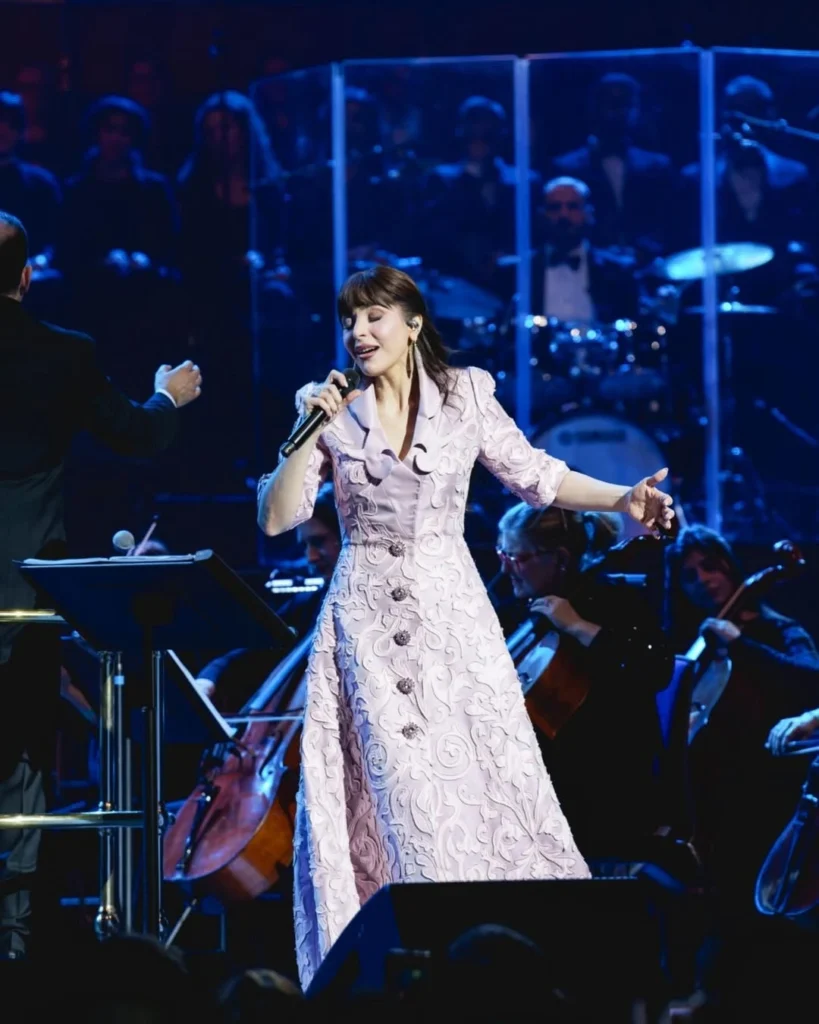
Abeer Nehme’s journey unfolds as a rare balance between scholarship and artistry, where music is not only performed but deeply understood, preserved, and reimagined. Emerging from Lebanon, she has built a presence that transcends the conventional boundaries of a singer, positioning herself as a cultural bridge between ancient traditions and contemporary expression. Her voice is not defined by a single genre or era, but by a spectrum that moves fluidly across time, geography, and language, creating a narrative that feels both rooted and expansive.
From the beginning, her relationship with music was shaped by depth rather than surface. Born in Tannourine, she grew up surrounded by a rich soundscape of traditions that would later define her artistic identity. This early immersion evolved into formal study, where she pursued oriental singing at the Holy Spirit University of Kaslik, graduating with exceptional distinction. Her academic path did not distance her from performance, but instead strengthened it, giving her a technical and intellectual foundation that would become central to her work.
What sets Abeer Nehme apart is her ability to exist simultaneously as a performer and a musicologist. She is often described as an “all styles specialist,” a reflection of her capacity to navigate between different musical worlds with precision and authenticity. Her repertoire spans traditional tarab, Lebanese music, Rahbani compositions, and sacred chants drawn from Syriac, Maronite, and Byzantine traditions. This diversity is not a matter of experimentation alone, but of intention, where each style is approached with respect for its origins and meaning.
Her voice carries a distinct sense of purpose. It is not only about performance, but about preservation, about keeping cultural and spiritual traditions alive in a world that is constantly moving forward. Through projects such as her interpretations of ancient Syriac chants with orchestral accompaniment, she has contributed to safeguarding musical forms that might otherwise fade from contemporary consciousness. At the same time, she ensures that these traditions are not confined to the past, but presented in ways that resonate with modern audiences.
This ability to bridge past and present defines much of her career. Whether performing in international festivals or collaborating with renowned composers, she brings a sense of continuity to her work. Her performances are not isolated moments, but part of a larger dialogue between cultures and eras. She has sung in more than two dozen languages, a testament not only to her technical ability but to her commitment to connecting with diverse audiences. This multilingual approach transforms her voice into a universal medium, capable of crossing boundaries without losing its identity.
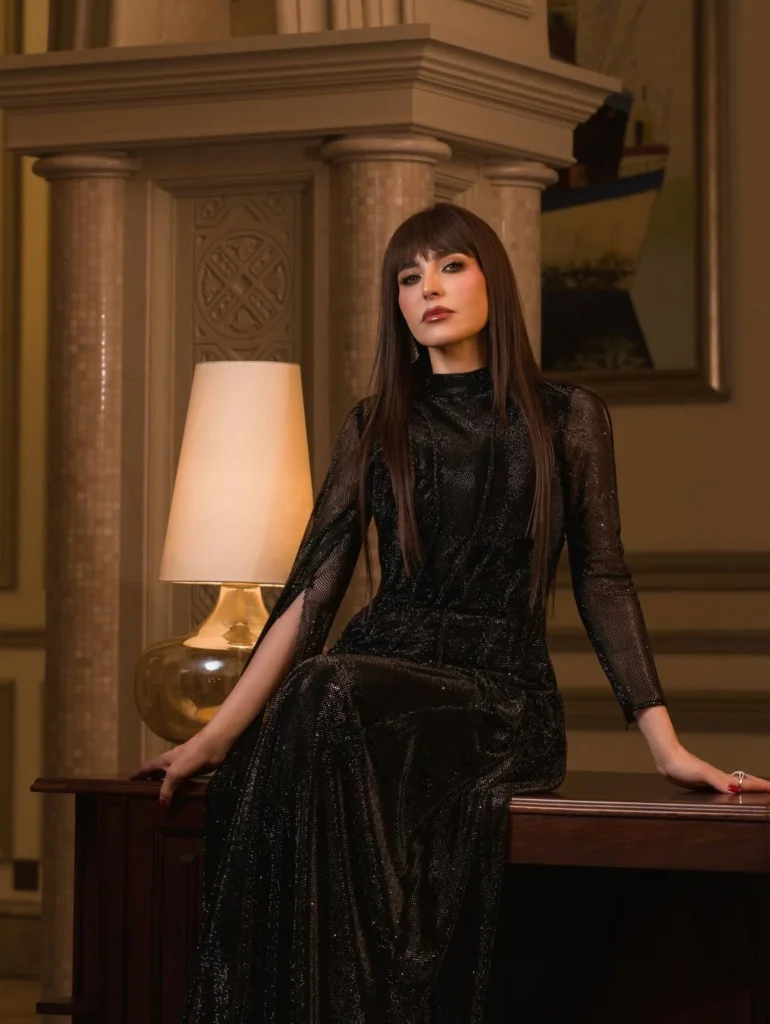
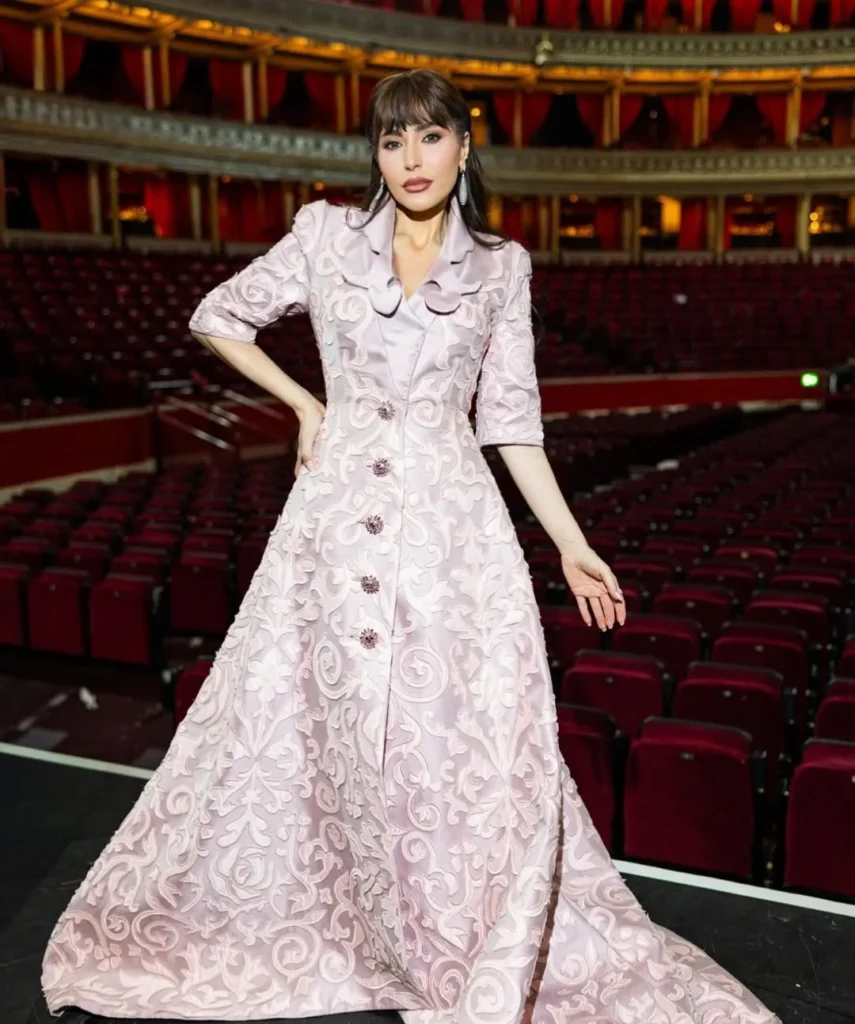
Yet, what makes her journey particularly compelling is her willingness to evolve. While deeply rooted in classical and sacred traditions, she has not remained confined within them. In recent years, she has explored contemporary sounds, including Arabic pop, expanding her artistic range while maintaining the integrity that defines her. This transition reflects a broader philosophy, one that views growth not as a departure from origins, but as an extension of them. It is a reminder that tradition and innovation are not opposing forces, but complementary ones.
Her approach to music is also shaped by a strong sense of discipline. Behind the emotional depth of her performances lies years of study, practice, and exploration. This dedication is evident in the way she approaches each project, with attention to detail and a commitment to authenticity. It is this combination of intellect and emotion that gives her work its distinctive character, where technical mastery supports, rather than overshadows, artistic expression.
There is also a spiritual dimension that runs through her work, subtle yet unmistakable. Much of the music she engages with is rooted in religious and liturgical traditions, carrying with it a sense of reverence and introspection. Even when performing outside these contexts, there is a depth to her voice that suggests an awareness of music as something beyond entertainment. It becomes a form of connection, to history, to culture, and to something more intangible.
Her presence within the modern music landscape also reflects a broader shift in how artists define themselves. She does not fit neatly into a single category, and that is precisely her strength. In a world that often encourages specialization, she embraces multiplicity, demonstrating that an artist can move between genres and roles without losing coherence. This flexibility allows her to reach different audiences, from those drawn to traditional sounds to those seeking contemporary interpretations.
At the same time, she remains grounded in her identity. Despite her international reach and diverse repertoire, there is a clear sense of origin in her work. Lebanon, with its layered cultural and musical heritage, continues to inform her perspective. This connection is not expressed through repetition, but through a deeper influence that shapes how she approaches sound, language, and storytelling.
Her career also highlights the importance of education within the arts. By combining performance with musicology, she brings an analytical dimension to her work that enriches both her own understanding and that of her audience. This approach challenges the idea that music should be experienced only emotionally, showing that intellectual engagement can deepen appreciation rather than diminish it.
In the digital age, where visibility often depends on speed and frequency, Abeer Nehme represents a different model of presence. Her work is not driven by constant output, but by substance. Each project feels considered, each performance part of a larger trajectory. This measured approach contributes to a sense of longevity, where her relevance is not tied to trends but to the enduring quality of her work.
Her influence extends beyond music itself. By preserving and reinterpreting cultural traditions, she contributes to a broader conversation about identity and heritage in a rapidly changing world. Her work serves as a reminder that cultural expression is not static, but something that can evolve while remaining true to its roots.
Looking ahead, her path continues to reflect both continuity and exploration. Whether through new compositions, collaborations, or further expansion into contemporary genres, her journey remains open, guided by a commitment to authenticity and growth. It is this balance that defines her, the ability to move forward without leaving anything behind.
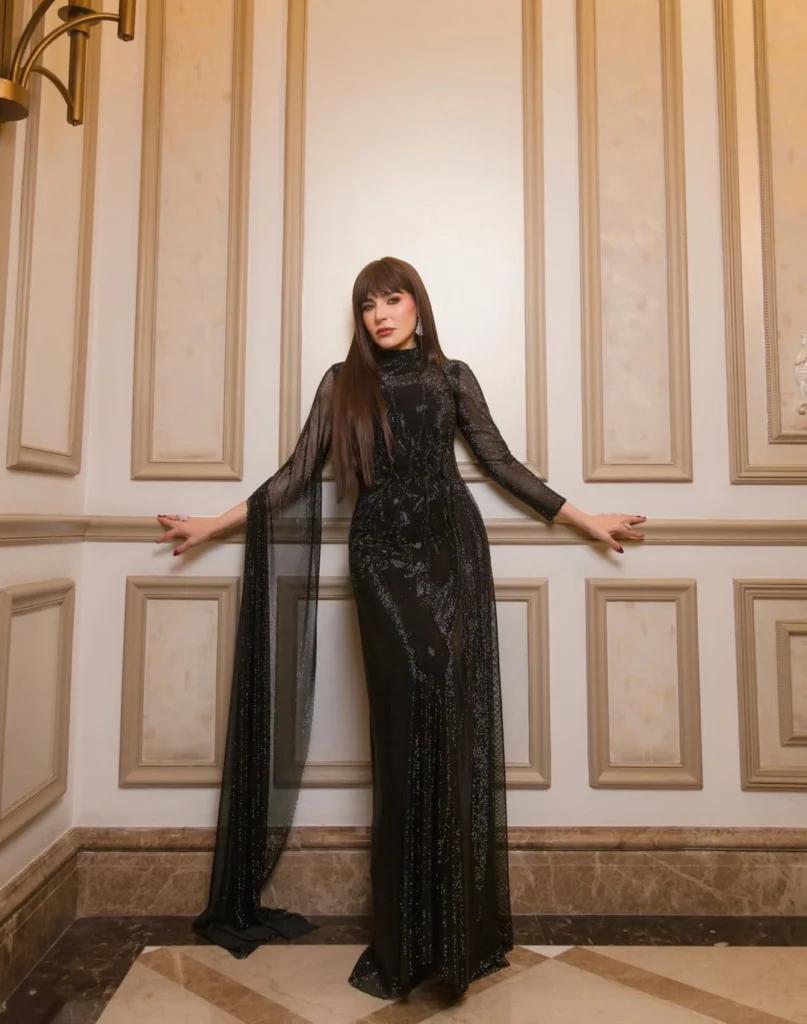
Ultimately, Abeer Nehme’s story is one of depth and connection. It is about a voice that carries history while embracing the present, about an artist who understands that music is not only something to be heard, but something to be preserved, studied, and lived.