Magnav MENA

Top Stories

Sheikha Al Mayassa Bint Hamad Bin Khalifa Al Thani
Lifestyle, Top Stories

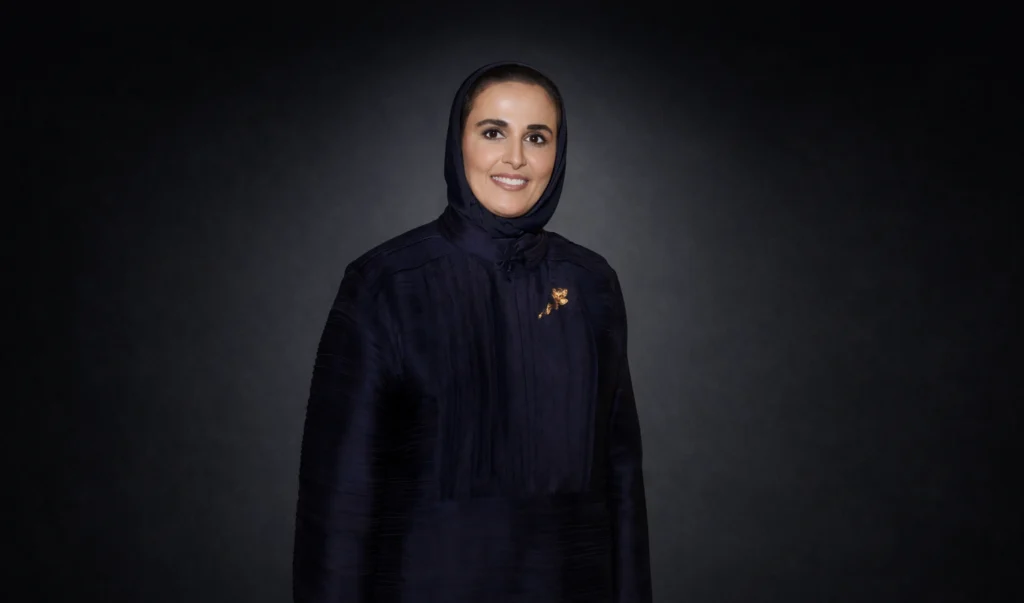
Her Excellency Sheikha Al Mayassa Bint Hamad Bin Khalifa Al Thani

Her Excellency Sheikha Al Mayassa Bint Hamad Bin Khalifa Al Thani The Woman Who Taught a Region How to See Itself Through Culture By Editorial Desk In the Gulf, culture once lived in quiet places. It resided in the rhythm of spoken poetry, in the patience of hand embroidery, in the unrecorded elegance of daily rituals passed between generations of women. What Sheikha Al Mayassa bint Hamad bin Khalifa Al Thani has accomplished is not the amplification of culture, but its translation. She has taken the inner life of a region and given it form, space, and visibility without stripping it of its soul. For the readers of Magnav MENA, Sheikha Al Mayassa represents a modern ideal of feminine influence. She is a woman whose power does not announce itself loudly but unfolds deliberately. Her presence in global cultural circles is not defined by spectacle, but by depth, discernment, and a rare emotional intelligence that understands culture as a living, breathing force rather than a static inheritance. Born in Doha in 1983, Sheikha Al Mayassa grew up at a moment when Qatar was quietly preparing for transformation. Her formative years were shaped by a balance of rooted tradition and expansive curiosity. Education became the lens through which she learned to understand the world and her place within it. At Duke University, where she studied literature and political science, she developed a sensitivity to narrative and structure. Further academic experiences at Sciences Po and Columbia University refined her ability to navigate complex cultural dialogues with nuance and clarity. What distinguishes her intellectual journey is not the prestige of the institutions, but the way she internalized learning. Literature trained her to read between lines. Political science taught her how systems shape societies. Together, they formed a worldview in which culture is not ornamental, but foundational. When she returned to Qatar, she did not seek the spotlight. Instead, she began cultivating something far more enduring: an ecosystem where creativity could belong to everyday life. As Chairperson of Qatar Museums, Sheikha Al Mayassa reshaped the idea of what cultural institutions could mean in the Middle East. Museums under her vision are not distant temples of knowledge. They are intimate spaces that invite reflection, emotion, and connection. Rather than positioning culture as something to be observed, she made it something to be felt. The Museum of Islamic Art, standing gracefully along Doha’s waterfront, does more than house centuries of artistic mastery. It offers continuity. Visitors move through its galleries not as outsiders peering into history, but as participants in an ongoing civilizational story. The National Museum of Qatar tells its narrative differently. Its architecture unfolds like memory itself, organic and layered, mirroring the desert rose that inspired its form. Inside, the story of a nation is told through voices, textures, and lived experiences rather than grand declarations. Beyond museum walls, art under Sheikha Al Mayassa’s stewardship enters daily life. Sculptures rise quietly from desert landscapes. Installations appear in hospitals, public spaces, and along coastlines. Art becomes a companion rather than a destination. This approach has subtly reshaped how people in Qatar interact with creativity, making it accessible, unpretentious, and deeply human. Her approach to collecting art reflects the same sensibility. While her acquisitions have often made international headlines, the true significance lies in intention rather than price. Each work she brings into Qatar’s cultural orbit carries emotional weight. These are pieces chosen for their ability to provoke thought, invite stillness, and encourage dialogue. She collects not to impress, but to educate the eye and the spirit. Restraint defines her curatorial philosophy. Institutions never overshadow the works they hold. The works never eclipse the audience. There is balance, and within that balance, respect. Art is allowed to speak in its own language, without excess interpretation or theatrical framing. Fashion occupies a unique place in Sheikha Al Mayassa’s cultural vision. For her, fashion is not trend driven or seasonal. It is identity in motion. Through Fashion Trust Arabia, she has provided designers from the Middle East and North Africa with something invaluable: belief in the worth of their own voice. The platform does more than offer exposure. It nurtures confidence, craftsmanship, and continuity. Designers supported through this initiative are encouraged to translate heritage rather than abandon it. Traditional techniques are reimagined, not replaced. Craft becomes contemporary without losing its memory. In doing so, she honors the long history of women in the region as creators, artisans, and storytellers whose work was often uncredited but deeply influential. Cinema is another language through which Sheikha Al Mayassa explores belonging. With the Doha Film Institute, she created a space where regional stories could unfold honestly. Film, in her philosophy, is a mirror rather than a megaphone. Through mentorship programs and festivals, filmmakers are supported in telling stories rooted in emotional truth rather than expectation. The result is a growing body of work that explores themes of identity, family, displacement, silence, and resilience. These films travel internationally, yet remain unmistakably connected to the region they emerge from. For women filmmakers in particular, the impact has been transformative, offering both opportunity and validation in an industry where representation has long been uneven. Beyond the arts, her commitment to education reveals the long horizon of her thinking. Through initiatives focused on access to learning across Asia and the Middle East, she reinforces a fundamental belief that culture cannot survive without education. Creativity requires literacy. Expression requires opportunity. Without these, art risks becoming ornamental rather than transformative. Education, in her worldview, is the soil from which cultural confidence grows. By supporting learning at scale, she ensures that future generations will not only consume culture, but contribute to it. Sheikha Al Mayassa’s influence is felt as much in how she carries herself as in what she builds. Her style is composed, intentional, and quietly authoritative. She does not dress to command attention, but to reflect clarity. Clean silhouettes, thoughtful craftsmanship, and an absence of excess mirror her broader philosophy. Nothing is accidental. Nothing is

Wael Kfoury, The Sovereign of Sentiment
Lifestyle, Top Stories

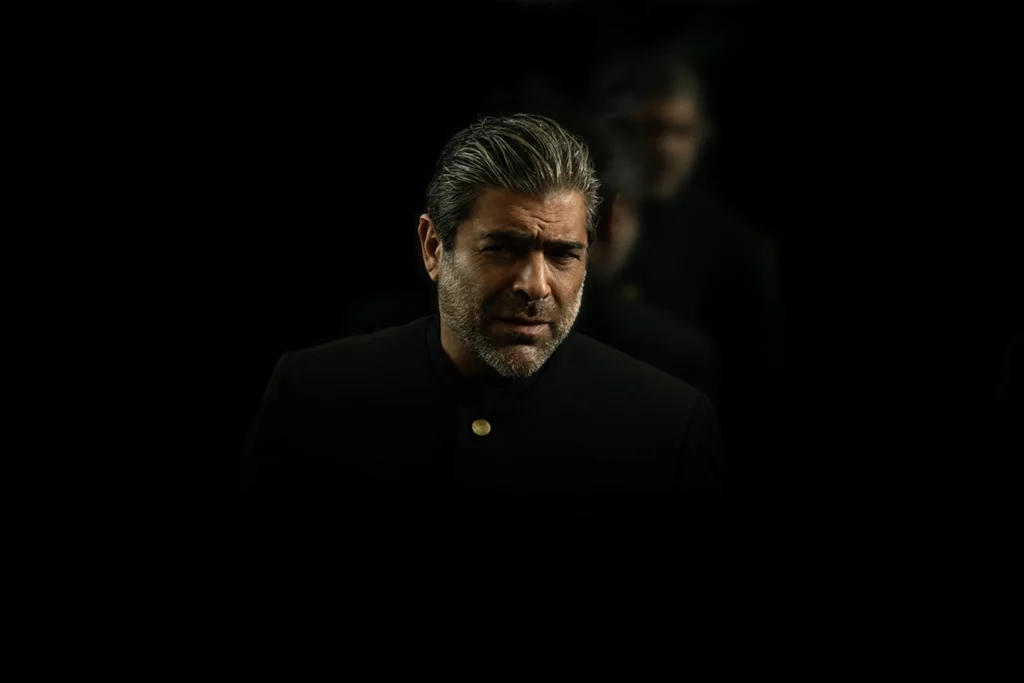
Wael Kfoury, The Sovereign of Sentiment

Wael KfouryThe Sovereign of Sentiment By James Wood In the high, sunlit reaches of the Beqaa Valley, where the air is scented with the crispness of the mountains and the ancient soil of Zahlé, a voice once emerged that would eventually command the emotional pulse of the Levant. To observe Wael Kfoury is to witness a figure who has achieved a rare kind of cultural permanence. He is an artist who has not merely survived the shifting tides of the music industry but has become its very anchor, a man whose name is synonymous with a specific, refined brand of romanticism. His journey is a narrative of exceptional discipline and an unwavering commitment to the art of the ballad, proving that in a world of fleeting digital trends, the power of a pure, resonant tenor remains the ultimate currency. His story began in the modest surroundings of Hawch al Oumara, where the young Michel Emile Kfoury first discovered the depth of his own lungs. From a remarkably young age, it was clear that he possessed a gift that was both a blessing and a responsibility. His childhood was not one of idle play but of a burgeoning obsession with the mechanics of song. He found his first stage in the choir of his local church and the schoolyards of his youth, where his ability to navigate the complex scales of traditional folklore earned him the title of a wonder child. It was here, amongst the supportive community of his hometown, that the foundations of his future were laid, rooted in the respect and faith that would later become the hallmarks of his public persona. The transition from a local prodigy to a national phenomenon required a leap of faith that saw him journeying to the bustling, competitive heart of Beirut at the age of sixteen. It was a move born of necessity and ambition, driven by a desire to formalise his talent at the National Conservatoire of Lebanon. Those early years in the capital were marked by the rigours of academic study and the quiet struggle of a student seeking to make his mark. He immersed himself in the study of solfège at the Holy Spirit University of Kaslik, a period of his life that he remembers with a poignant clarity, often recalling the long commutes and the financial hurdles that preceded his eventual ascent. These trials served to sharpen his resolve, ensuring that when his moment finally arrived, he was prepared to meet it with the maturity of a seasoned professional. That moment came in the early nineties, on the stage of the legendary talent show that has served as the cradle for so many of the region’s icons. His appearance was nothing short of transformative. When he opened his mouth to sing, he did not just perform; he announced a new era for Lebanese music. The judges were moved by a voice that seemed to carry the wisdom of thirty years within the frame of a youth, and the golden medal he received was merely a formal acknowledgement of what the public already knew. He had arrived as a fully formed artist, possessing a vocal range that could soar with the majesty of the eagles above his native mountains and whisper with the intimacy of a shared secret. His debut into the professional world was characterized by a meteoric success that few could hope to replicate. His early hits became the soundtrack to a generation, songs that blended the traditional soul of the mountain folk with a modern, sophisticated pop sensibility. He became the voice of the lover, the dreamer, and the heartbroken, articulating the nuances of the human experience with a precision that was as technical as it is emotional. Even a mandatory period of military service, which might have silenced a lesser talent, only served to deepen his connection with his audience. He returned to the stage not as a faded memory, but as a more seasoned and resolute figure, ready to reclaim his position at the summit of the industry. The longevity of his career is a testament to his refusal to compromise on the quality of his craft. He has navigated the transition from the era of cassettes and compact discs to the limitless landscape of streaming with a deceptive ease, always remaining the most relevant voice in the room. His work is a masterclass in the orchestration of sentiment, a collection of albums that explore the many facets of love with a dignified intensity. He does not chase the latest fads; instead, he allows the trends to circulate around him, safe in the knowledge that his audience craves the timelessness of his delivery. There is a classicism to his music, a reliance on the strength of the melody and the honesty of the lyric that ensures his songs never age. Beyond the soaring choruses and the sold out world tours, there is a man who maintains a carefully guarded privacy, a sanctuary that allows him to remain grounded amidst the clamour of fame. He is a person of deep seated values, often speaking of the importance of family and the debt of gratitude he owes to his parents. His life in the public eye is one of professional excellence and personal discretion, a balance that has allowed him to maintain a level of mystery that is rare in the age of constant connectivity. He is a figure who understands that his true power lies in the music, and he allows his work to speak for itself, choosing to inhabit the limelight only when he has something meaningful to say. His influence extends far beyond the borders of his homeland, as he has become a global ambassador for the beauty of the Arabic language and the sophistication of Lebanese culture. From the opera houses of Europe to the great arenas of North America and Australia, he carries the spirit of the Beqaa with him, proving that the language of emotion is universal. He

Antonela Roccuzzo
Lifestyle, Top Stories

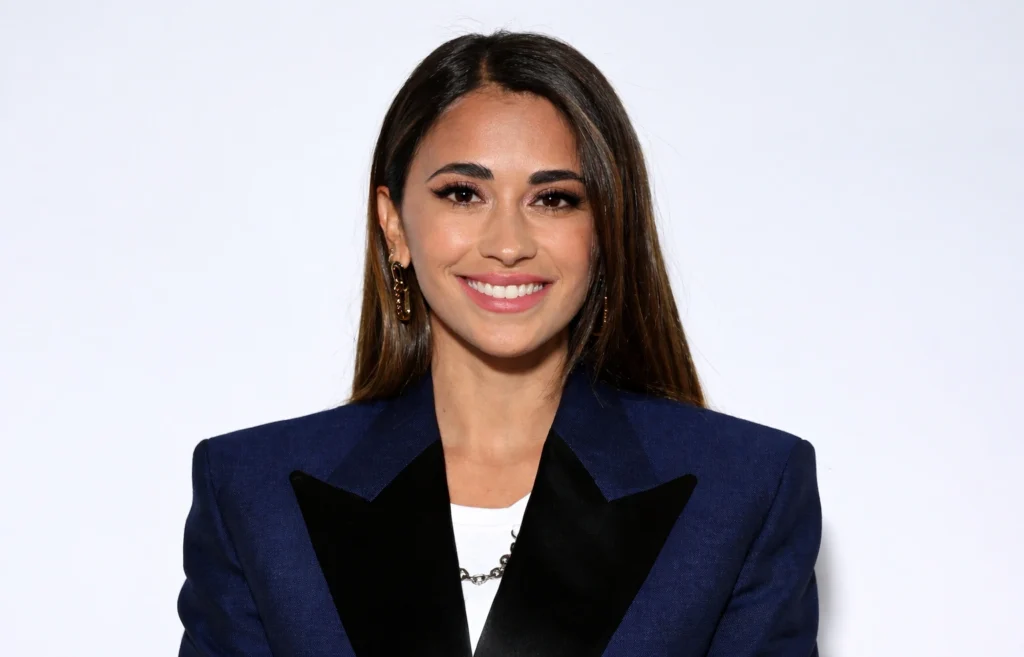
Antonela Roccuzzo, The Poetry of Presence

Antonela Roccuzzo The Poetry of Presence By Michele Clark In the quiet, cobblestoned memories of Rosario, there exists a story that feels less like the typical trajectory of a global icon and more like a whispered promise kept across decades. It is here, amidst the humid air of Argentina’s third city, that a young girl with an observant gaze first crossed paths with a boy who would eventually hold the world in his hands. Yet, to look at the woman she has become is to see someone who has carefully curated her own light, independent of the blinding glare that follows her husband. She possesses a rare, tranquil sort of influence, one that does not shout for attention but rather draws it in through a steady, elegant consistency. Her journey began not on the red carpets of Europe but in the lecture halls of the National University of Rosario. There was a time when her life was defined by the rigorous pursuit of odontology, followed by a transition into the study of social communication. These early academic chapters reveal a mind that sought structure and understanding before the tides of fate pulled her toward a more public existence. When she eventually made the crossing to Spain, it was not merely as a companion but as a woman embarking on a profound transformation, one that would see her evolve from a private student into a figure of immense global resonance. There is a specific kind of grace required to navigate a life lived in the shadow of a sporting deity. It requires a firm sense of self and an unwavering internal compass. She has mastered this balance with a deceptive ease, moving through the high-pressure environments of Paris, Barcelona, and Miami without ever losing the grounded essence of the girl from Rosario. Her presence at the edge of the pitch is a study in quiet intensity, a maternal and supportive fixture that remains unchanged whether the stadium is echoing with the roar of victory or the hush of a difficult defeat. It is this reliability, this refusal to be performative, that has endeared her to millions. Beyond the domestic sphere, she has articulated a professional identity rooted in a love for the tangible and the aesthetic. Her ventures into the world of children’s fashion and her collaborations with storied European houses speak to a refined sensibility. She does not merely lend her name to projects; she lends them her values. When she aligns with brands, there is a palpable sense of synergy, a focus on the health of the body and the spirit. Her interest in wellness and movement is not a trend but a lifestyle, reflected in the way she approaches both her business and her personal discipline. Her digital footprint is perhaps the most modern aspect of her life, yet even there, she maintains a classic distance. With a following that rivals the populations of entire nations, she uses her platform to share fragments of a life that feels remarkably relatable despite its extraordinary circumstances. There are no frantic displays of opulence, only the warm, sun-drenched snapshots of a family growing together. We see the devotion of a mother to her three sons, the shared laughter of a marriage that has survived the transition from childhood to global fame, and a commitment to philanthropic causes that seek to protect the most vulnerable. Her work as an ambassador for children’s welfare organizations highlights a deep seated empathy. She has used her considerable reach to shine a light on poverty and the rights of the young, moving beyond the superficiality of the influencer era to engage with the world in a way that is meaningful and lasting. It is a quiet form of activism, one that relies on the power of her presence to elevate the voices of those who cannot speak for themselves. This maternal instinct extends far beyond her own household, coloring her public persona with a sense of warmth and responsibility. As she moves through the vibrant, neon-lit landscapes of her new life in Florida, she seems to carry the stillness of her origins with her. The transition to Miami has brought a new vibrancy to her style, a embrace of bolder hues and a more relaxed, coastal energy, yet the core of the woman remains untouched. She is the silent architect of a sanctuary that allows her family to remain whole in the face of unprecedented scrutiny. It is a monumental task, performed with a smile that suggests she knows exactly who she is and what matters most. The allure of her story lies in its longevity and its loyalty. In an age of fleeting connections and rapid reinventions, there is something deeply moving about a bond that has remained unbroken since the age of nine. It suggests a depth of character that is as rare as it is beautiful. She is not merely a witness to history; she is the steady heartbeat behind the man who makes it. Her strength is not the kind that demands a stage, but the kind that provides a foundation. It is the strength of a woman who has found harmony between the public and the private, the extraordinary and the everyday. To observe her now is to see a woman in the full bloom of her own agency. She is a businesswoman, a philanthropist, and a mother, but above all, she is a person of profound poise. She has navigated the complexities of fame without falling prey to its many traps, choosing instead to walk a path of her own making. Her influence is felt in the way she carries herself, in the causes she champions, and in the quiet dignity with which she exists at the center of a global storm. Ultimately, the story of this woman is a testament to the power of staying true to one’s roots while reaching for the stars. She has managed to remain the girl from Rosario even as she became a

Ayisha Siddiqi, The Eloquence of Resistance
Lifestyle, Top Stories

Ayisha Siddiqi, The Eloquence of Resistance

Ayisha Siddiqi The Eloquence of Resistance By Tia Holder In the vast and often sterile corridors of international diplomacy, where the language of crisis is frequently reduced to the cold mathematics of carbon and commerce, there is a voice that sounds like the earth itself. It is a voice that carries the silt of the Chenab River and the salt of the shoreline, a bridge between a childhood in the tribal lands of Pakistan and a youth spent on the front lines of global advocacy. Ayisha Siddiqa does not simply speak to power; she addresses it with a lyrical ferocity that demands a reckoning with the human soul. She has become a figure of singular importance, a woman who has realised that while policy may move the hand, only poetry can move the heart. Her story is one of profound observation, beginning in the agricultural heartlands of Jhang. There, amongst the rhythms of her grandparents’ farm, she first understood the earth as a living, breathing entity, a matriarchal provider to whom we owe an eternal debt. This was not an abstract environmentalism learned from a textbook, but a lived reality. When that reality was fractured by the arrival of illness and the haunting silence of a polluted river, the realisation was stark and life-altering. By the age of fourteen, she had seen the direct consequences of environmental neglect, witnessing how the degradation of the land is inextricably linked to the violation of human rights. This early awakening forged a defender who views the protection of the planet not as a choice, but as an ancestral duty. Moving to the vibrant, chaotic energy of New York did not dim these memories; it sharpened them. As she navigated the academic rigours of political science and English, she began to weave her experiences into a formidable tapestry of activism. She emerged as a leader who could mobilise hundreds of thousands on the streets of Manhattan while simultaneously interrogating the legal frameworks of climate litigation. Her work is a constant defiance of silos, a refusal to separate the suffering of the Global South from the consumption of the Global North. She stands as a reminder that the climate crisis is not a future threat to be managed, but a current apocalypse being endured by those whose voices are too often muffled by the din of industry. There is a quiet, magisterial authority in the way she occupies spaces traditionally reserved for the elder statesmen of the world. As an advisor to global institutions, she brings the unvarnished truth of the frontline to rooms that are often insulated by wealth and privilege. She has been instrumental in the creation of movements that seek to strip away the influence of polluters from the very forums meant to solve the crisis. Her co-founding of initiatives aimed at transparency and education was born from a desire for accountability and a demand for a seat at the table that is not bought by the highest bidder. She represents a generation that has grown tired of incrementalism and is instead reaching for a radical, restorative justice. Perhaps her most potent weapon is her command of the written word. To hear her read her poetry is to witness a form of alchemy, where the pain of displacement and the grief of loss are transformed into a call for collective courage. She has famously told the gathered leaders of the world that while they spoke of sustainability, her people were dying, a rebuke that stripped away the veneer of diplomatic politesse. For her, art is not an ornament but a primary tool of protest. It is the means by which she preserves the history of her community and the beauty of a wounded world. In her verses, the environment is never a mere backdrop; it is a character, a victim, and ultimately, a source of resilience. This resilience is deeply rooted in her identity as a woman from a tribal community, where the structures of care and the protection of life are paramount. She has often spoken of how the same systems that exploit the earth are those that marginalise women and girls, creating a powerful intersectional lens through which she views the struggle. Her advocacy is a defence of life in its most essential forms, from the safety of drinking water to the sanctity of the land itself. By elevating these stories, she forces the world to see the faces behind the statistics, making the distant impacts of a warming planet feel immediate and intimate. In the years since she was recognised as a leading global voice for change, her influence has only deepened. She remains an iconoclast who is unimpressed by the hollow machinery of corporate promises, choosing instead to invest her energy in the youth who will inherit the consequences of today’s indecision. Her work is intergenerational, a bridge of knowledge that ensures the fire of advocacy is passed to those coming after her. She moves between the roles of research scholar, activist, and poet with a seamless grace, always guided by the conviction that we are all part of a collective global destiny. The brilliance of her presence lies in her refusal to succumb to the paralysis of despair. Despite the apocalypses she has witnessed, her message remains one of a fierce and demanding love. It is a love for humanity that is willing to gamble on our better nature, a love that insists on the possibility of a softer, more beautiful future. She stands as a beacon for those who feel forgotten by the march of progress, a woman who has found her power not in the pursuit of fame, but in the unwavering defence of her people and her planet. In the end, she reminds us that to fight for the earth is to fight for ourselves, and that the most enduring revolution is one built on a promise to the leaves and a commitment to life.

Bvlgari, The Roman Renaissance of the 2026 Aesthetic
Lifestyle, Top Stories

Bvlgari, The Roman Renaissance of the 2026 Aesthetic

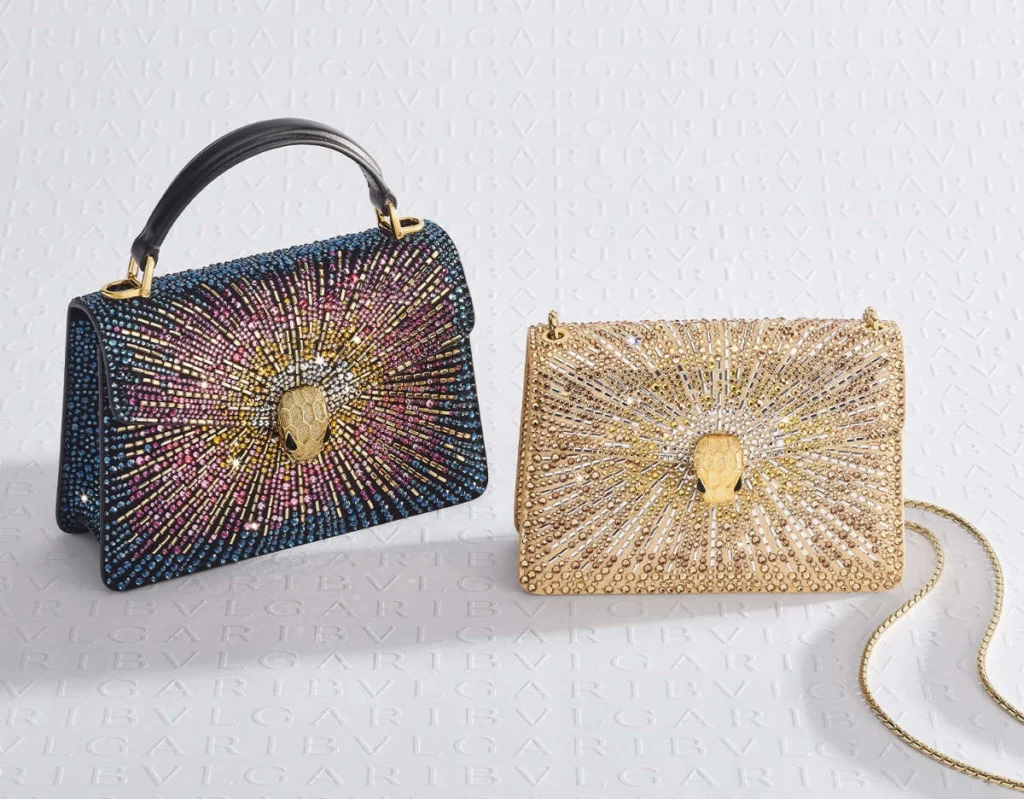
Bvlgari The Roman Renaissance of the 2026 Aesthetic By Editorail Desk As we stand on the precipice of 2026, the global fashion landscape is undergoing a profound reorientation. The frenetic pace of the early twenties, characterised by digital saturation and the rapid turnover of micro-trends, has given way to a yearning for what is enduring, tactile, and intellectually resonant. In this new era, where the consumer prioritises “buying less but better,” Bvlgari has emerged not just as a participant in the luxury market but as the very breath that sustains its most sophisticated aspirations. By seamlessly weaving its ancient Roman soul with the avant-garde requirements of the modern wardrobe, the Maison has positioned itself as the definitive architect of 2026’s “High Craft” movement. The 2026 fashion cycle is defined by a desire for “reorientation and mindful expression,” and nowhere is this more evident than in Bvlgari’s Spring/Summer 2026 leather goods and accessories collection. Under the creative direction of Mary Katrantzou, the brand has executed a masterstroke of design synthesis, where the weight of high jewellery is translated into the suppleness of fine leather. This is the year of the “Jewel-Bag,” a concept that treats the handbag not as a mere utility but as a wearable sculpture.  The revival of the Serpenti Cuore 1968, a heart-shaped silhouette with a metallic handle inspired by heritage watchmaking, serves as the perfect talisman for 2026. It addresses the cultural shift toward nostalgic yet futuristic forms, offering a sense of “playful, rebellious romanticism” that modern fashionistas are using to counter the clinical nature of an AI-driven world. This season, the brand is providing the necessary oxygen for a market gasping for authenticity. The palette for 2026 is one of “Roman Vibrancy”, think Sunbeam Citrine, Tangerine Garnet, and Royal Ruby, colours that are not just visual choices but emotional provocations. These hues provide a vital spark against the soothing, pearlescent neutrals that serve as the base of the contemporary wardrobe. By embedding the Calla motif, inspired by the mosaics of the Baths of Caracalla, into the grain of its leather, Bvlgari is facilitating a cultural dialogue between the feet of the modern woman and the floors of ancient Rome. It is this ability to ground the wearer in history while propelling them toward the future that makes the brand uniquely indispensable in 2026. Sustainability, once a peripheral declaration, has become the baseline of fashion’s survival in 2026, and Bvlgari’s “Sustainable by Innovation” strategy is the gold standard of this transition. The Maison’s commitment to “Creative Circularity” and the LVMH LIFE 360 programme is not merely about recycled materials; it is about the durability of meaning. By 2026, the luxury consumer is no longer impressed by novelty; they demand traceability. Bvlgari’s introduction of “Connected Jewellery”, embedding unique micro-engraved codes to document the origin of every gemstone, is a revolutionary step toward radical transparency. This isn’t just good ethics; it is a new form of luxury where the “story” of the piece is as precious as the stone itself. It provides the “breathe” for 2026 by removing the suffocating weight of ethical uncertainty from the act of purchase. Furthermore, the 2026 aesthetic is heavily influenced by the “Brooch Renaissance” and the return of “Refined Chokers,” trends that Bvlgari has practically invented through its high jewellery archives. The Aeterna and Polychroma collections are the ultimate responses to the year’s desire for “Heirloom-Quality” investment. As silver and mixed metals move to the forefront of the 2026 trend report, Bvlgari’s mastery of the Tubogas technique and its bold use of cabochon-cut gems provide the necessary textural contrast for a season defined by “Material Blending.” The brand understands that in 2026, fashion is a narrative tool. Whether it is a Serpenti necklace that symbolises perpetual rebirth or a Divas’ Dream piece that echoes architectural grandeur, Bvlgari is providing the symbols that help the modern individual navigate a complex global identity. In the realm of high horology, the 2026 fashion need for “Technical Mastery as Aesthetic” is met by the record-breaking Octo Finissimo series. In an age where digital watches are ubiquitous, the mechanical purity of Bvlgari’s watchmaking serves as a quiet rebellion. It is a testament to the fact that true luxury in 2026 is found in the “Pinnacle of Craftsmanship”, the ability to create something that is both incredibly thin and immensely powerful. This duality mirrors the lives of the brand’s global clientele: people who are operating at high velocities but remain anchored by a deep appreciation for the artisanal. Ultimately, Bvlgari in 2026 is a lighthouse of “Intellectual Opulence.” It has successfully moved beyond the transactional nature of retail to become a lifestyle of “Roman Boldness.” Through its hotels, its fragrances, and its unparalleled jewellery, the Maison is providing a holistic atmosphere of elegance that is essential for a world seeking to rediscover its soul. It is a brand that understands that the future of fashion is not in the “new,” but in the “eternal.” By honouring the endless cycle of time and the beauty of nature’s most rare gifts, Bvlgari is ensuring that we don’t just wear fashion in 2026, we breathe it. Would you like me to create a visual mood board description for a 2026 editorial shoot that pairs Bvlgari’s High Jewelry with the season’s leading sustainable fabric trends?

Huda Kattan
business, Top Stories

Huda Kattan, The Global Glamour of an American-Iraqi Beauty Empire

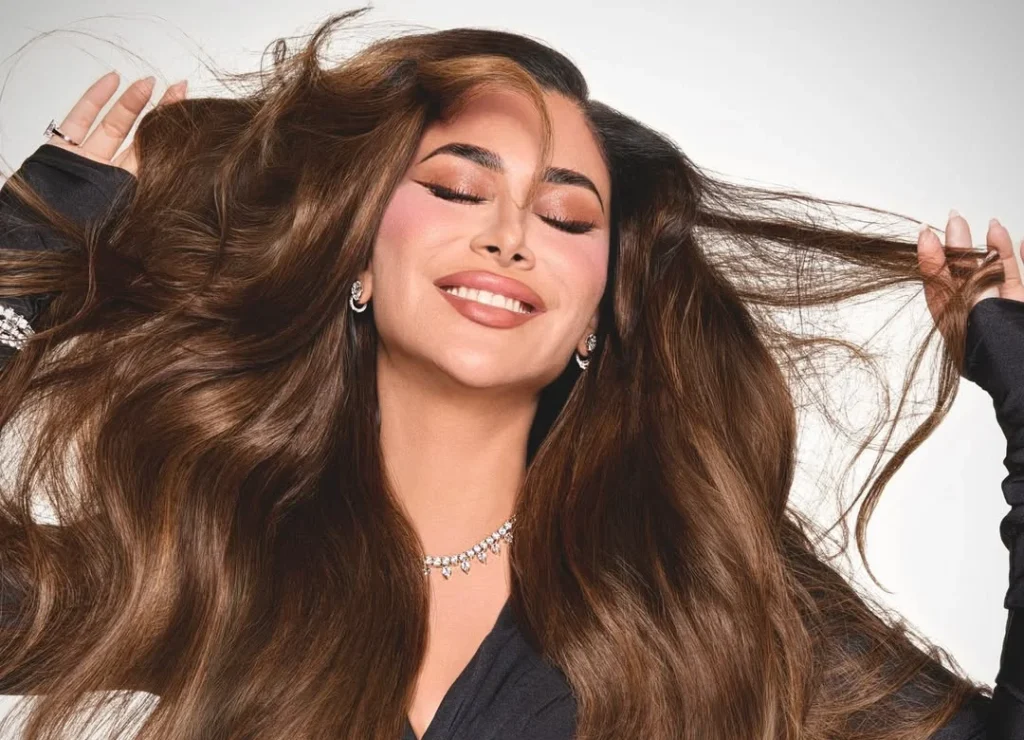
Huda Kattan The Global Glamour of an American-Iraqi Beauty Empire By Tia Holder The story of Huda Kattan is a vibrant tapestry woven from Iraqi heritage, an American upbringing, and the dazzling, borderless ambition of Dubai, a narrative that transcends mere commerce to become a powerful cultural statement, a modern fairy tale of passion and purpose, born not from a boardroom but a blogger’s genuine love for transformation. She was born in Oklahoma, to immigrant parents from Iraq, a childhood steeped in two worlds, a duality that shaped her vision, giving her a unique lens on beauty that blended the Western appreciation for polished technique with the Middle Eastern embrace of dramatic, unapologetic glamour, the kind of beauty that uses the eyes as a canvas for profound expression, often a necessity in a culture where the face is partly veiled and the eyes become the sole focus. This early life, feeling like an outsider in a predominantly white, Christian community, fostered a profound desire for acceptance and a keen eye for the art of self-creation, turning to makeup at the age of twelve as a source of comfort and a tool for building an identity. Her early career path was conventionally academic, majoring in finance at the University of Michigan, a trajectory guided perhaps by a desire for stability, a practical grounding that her parents, as immigrants, likely encouraged, but the corporate world of finance, where she worked briefly in Dubai after moving there in 2006, proved to be a miserable fit for her creative soul, a space that felt stifling, one where she was asked to dress down and wear less makeup to conform.  It was a pivotal rejection, being let go from that job, that she bravely reframed as a sign, an undeniable push toward her true passion. She took the plunge, enrolling in the prestigious Joe Blasco Makeup School in Los Angeles, honing her skills, working with high-profile clients, before returning to Dubai, a city that would become the crucible of her entrepreneurial empire. Dubai, a sprawling, ever-evolving, cosmopolitan metropolis, was more than just a place of residence, it was a land of opportunity, a perfect, fertile ground for her burgeoning dream. It is a city defined by its multiculturalism, a place where people from every corner of the world converge, bringing with them diverse beauty standards and an unquenchable thirst for quality and luxury, a perfect launchpad for a brand focused on inclusivity and high performance. Living and working there, Huda recognised a fundamental truth: the Middle East possesses a deep, ancient, and celebratory relationship with beauty, where intricate makeup is a cultural norm, not just for special occasions, and this environment, with its appreciation for high-impact artistry, gave her an audience that was ready for a new level of glamour. She began in 2010, not with a product line, but a blog, ‘Huda Beauty,’ a digital gathering place where she shared tutorials, tips, and product reviews, using the power of social media, particularly Instagram, to build a direct, transparent, and intensely loyal community. She wasn’t an advertiser, she was a friend, a relatable expert sharing secrets, and this authenticity, this human-like approach, was revolutionary in the heavily filtered world of beauty. Her business life officially began in 2013, sparked by a simple but frustrating gap in the market, a lack of high-quality, impactful false eyelashes that met her professional standards. With a small investment from her sister, she launched a line of lashes, the first Huda Beauty product, a move that quickly disrupted the industry, gaining immediate cult status when they were worn by a global reality television star, an event that instantly catapulted the Dubai-based brand onto the global stage. The brand’s initial success, selling thousands of units quickly, was a clear signal that her vision resonated, speaking to a diverse, global consumer who felt overlooked by traditional Western beauty houses. Huda Beauty, headquartered in Dubai, grew into a formidable global empire, not through conventional advertising, but through the direct and candid connection Huda maintained with her millions of followers, a feat that cemented her as a pioneer of the influencer-to-mogul blueprint. She and her sisters, Mona and Alya, built a brand that was inherently family-run, which added to its relatable, grounded persona, with Mona later co-founding the fragrance arm, Kayali, meaning ‘my imagination’ in Arabic, further weaving their cultural heritage into the business fabric. Her product launches, from the highly-pigmented eyeshadow palettes, often named with a nod to the region like Desert Dusk, to inclusive ranges of foundation shades, consistently cater to the diverse needs of her global community, consciously creating products for a wide spectrum of skin tones and types, a core commitment to inclusivity that the industry sorely needed. Her leadership style, shaped by her early experiences of feeling unheard and a deep-seated drive, is one of intense passion, transparency, and an almost brutal honesty, openly sharing the struggles and the triumphs of entrepreneurship, demystifying the process for her followers. She has, at times, stepped back and returned to the CEO role, a demonstration of the continuous evolution and self-reflection that marks her professional life, showing that even at the helm of a billion-dollar brand, the journey is one of constant work. She has consistently leveraged her platform to speak about social causes, demonstrating a willingness to engage with issues beyond cosmetics, using her influence to advocate for diversity, body positivity, and mental health, even taking a bold stance on global humanitarian crises, proving that her brand is rooted in more than just makeup, it is fundamentally tied to her values. Huda Kattan’s journey, from a girl struggling to find her place in two cultures, to an influential business leader operating from a vibrant, multicultural hub, is a testament to the power of authentic passion and the truly limitless opportunities that can be seized when a personal story is woven into a global enterprise. Her move to Dubai was instrumental, transforming her professional trajectory and allowing her cultural background to become

Haifa Wehbe
Lifestyle, Top Stories

Haifa Wehbe, The Eternal Reign of the Lebanese Diva

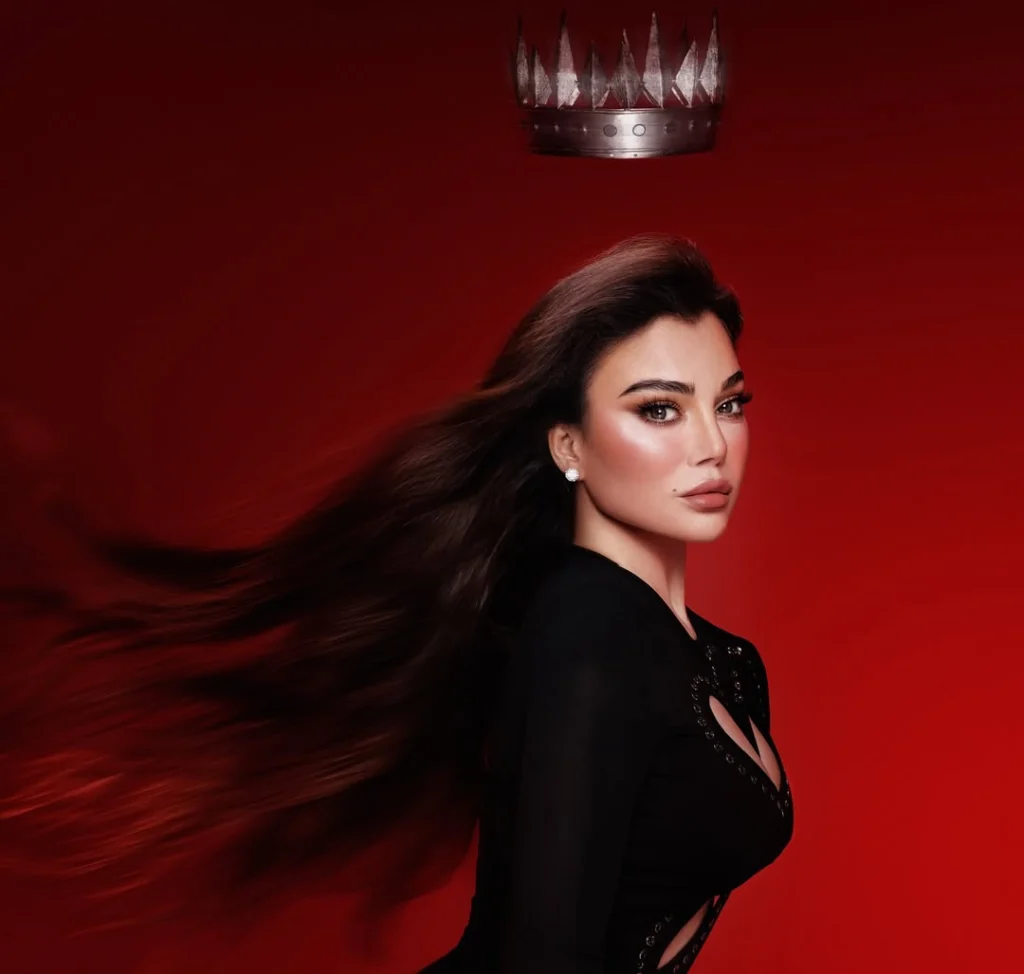
Haifa Wehbe The Eternal Reign of the Lebanese Diva By Hana Chase Few figures in the modern history of Middle Eastern entertainment have commanded as much attention, adoration, and debate as Haifa Wehbe. She is not merely a singer or an actress but a genuine cultural phenomenon who has managed to stay at the very peak of the entertainment industry for over two decades. Born in the small village of Mahrouna in Southern Lebanon to a Lebanese father and an Egyptian mother, her journey from a rural upbringing to the neon lights of Beirut and beyond is the stuff of modern legend. From the moment she first stepped into the public eye, it was clear that the region had found a new kind of icon, one who would challenge traditional norms while simultaneously embracing the rich, rhythmic heritage of Arabic music Her rise began in the world of beauty and fashion, where her striking features and natural poise made her an instant standout. Winning the title of Miss South Lebanon at just sixteen was the first hint of the stardom to come, though her path was not without its early hurdles. A runner-up finish in the 1995 Miss Lebanon pageant ended in a disqualification when it was revealed she had already been married and had a daughter, a revelation that might have ended a lesser career in the conservative climate of the mid-nineties. Instead, it only added to the aura of mystery and resilience that would define her. She pivoted seamlessly into high-fashion modelling, appearing on hundreds of magazine covers and becoming one of the most sought-after faces in the Arab world before she had even recorded a single note of music. When she finally made the transition to singing with her debut album in 2002, the reaction was nothing short of electric. That first record, titled Houwa El Zaman, introduced a sound that was unashamedly pop, danceable, and incredibly polished. It was not just about the music, though; it was the visual package that came with it. Her music videos were cinematic events, often featuring high-fashion wardrobes and choreography that felt years ahead of what her contemporaries were doing. She understood early on that in the digital age, a pop star needs to be a visual feast as much as an auditory one. Songs like Agoul Ahwak became instant hits, proving that she had the charisma to carry a melody as well as a catwalk. By the mid-2000s, Haifa had become a household name, but she was also a lightning rod for debate. Her 2005 album Baddi Aech, which translates to I Want to Live, arrived at a particularly poignant moment in Lebanese history, released shortly after the assassination of Rafik Hariri. The title track became an anthem for a generation seeking freedom and normal life amidst political turmoil. However, it was her more playful tracks, like the infamous Bus al-Wawa, that sparked the most conversation. Critics often took aim at her provocative image, yet her fans saw something different: a woman who was in total control of her narrative and her body. She was a pioneer of what we might now call celebrity authenticity, refusing to conform to the demure, traditional image often expected of female artists in the region. The sheer scale of her fame eventually caught the attention of the West. In 2006, she became the first Arab artist to perform alongside American hip-hop superstar 50 Cent during his concert in Beirut, a moment that symbolised the bridge she was building between Eastern and Western pop cultures. That same year, People Magazine included her in its list of the world’s fifty most beautiful people, a nod to her global appeal. Her film career followed a similar trajectory of high-profile success, starting with the Pepsi-produced Sea of Stars in 2008 and moving into more serious dramatic territory with films like Dokkan Shehata and the controversial yet commercially successful Halawet Rouh. These roles proved she was more than just a pop princess; she possessed a gritty, emotional depth that resonated with cinema audiences across Egypt and the Levant. Her personal life has often been as much a subject of public fascination as her career. From her high-profile marriage to and subsequent divorce from Egyptian businessman Ahmed Abou Hashima to her more recent legal battles with former management, she has lived her life under the most intense scrutiny imaginable. Yet, she has always handled these challenges with a certain steely grace. There is a famous story of a near-fatal accident in 2007 while she was filming a music video, where a small airplane accidentally struck the car she was driving. She emerged with only minor injuries, a moment her fans often cite as proof of her near-supernatural resilience. She seems to possess an innate ability to turn adversity into a narrative of strength, a quality that has kept her relevant while many of her peers have faded away. In recent years, she has embraced the digital era with more enthusiasm than perhaps any other artist of her generation. Her Instagram account is a masterclass in modern branding, a curated gallery of high fashion, behind-the-scenes glimpses, and direct communication with her millions of followers. It is here that she showcases her evolving style, moving from the glittery gowns of her early career to sophisticated, edgy streetwear. In 2019, she even launched her own fashion line, Beau Voyou, which she described as a world of freedom and love. The brand’s use of rainbow colours and its message of inclusivity further cemented her status as a progressive icon, showing that she was not afraid to use her platform to support social causes that matter to her younger, more globalised audience. Musically, she has continued to evolve as well. Her 2018 album Hawwa was a landmark release, produced independently without a major record label. It reached the top of the iTunes charts almost instantly, proving that her name alone was enough to drive massive commercial success. In 2021, her collaboration with Egyptian

Swarovski’s “Masters of Light”
Lifestyle, Top Stories

Masters of Light, A Crystal Love Letter to the Silver Screen by Swarovski

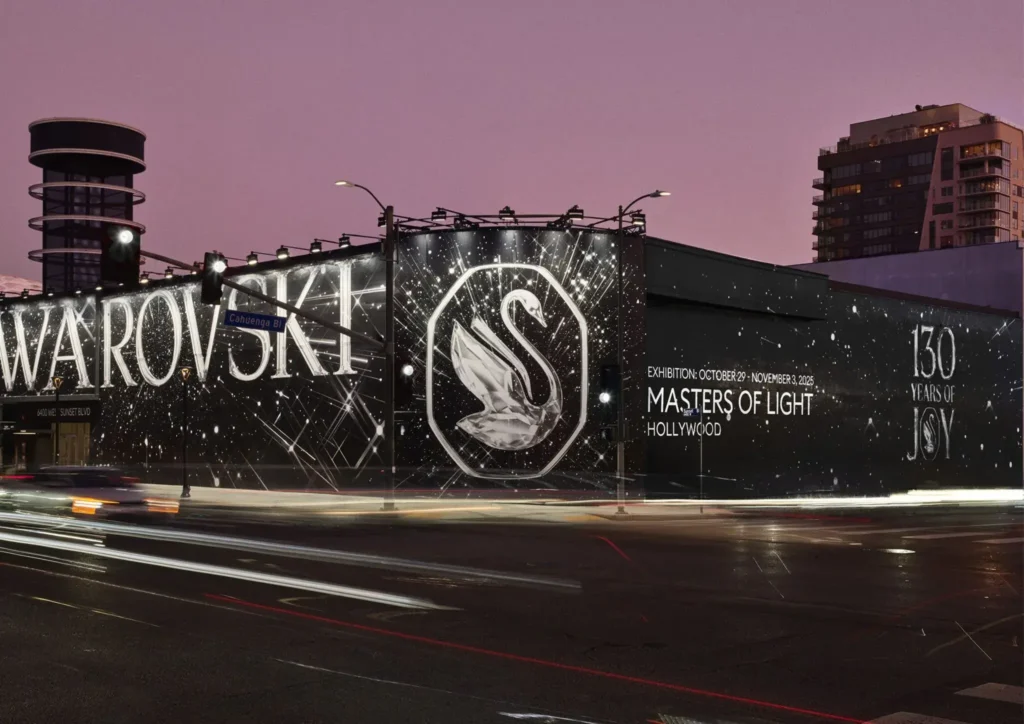
Masters of Light A Crystal Love Letter to the Silver Screen SWAROVSKI By Magnav Editorial Desk Swarovski’s Masters of Light,  Hollywood exhibition is not merely a retrospective; it is a dazzling, immersive celebration of a 130-year love affair between the Austrian crystal house and the global epicenter of glamour, Los Angeles. Reimagined for American audiences at the iconic Amoeba Music venue, the exhibit, conceptualized by Global Creative Director Giovanna Engelbert and curated by fashion critic Alexander Fury, serves as a compelling chronicle of how a tiny, impeccably cut piece of crystal has become an indispensable element of cinematic magic, pop culture, and high fashion. It is a stunning testament to the brand’s enduring ethos: that light, captured and refracted, has the power to spark joy and define an era. A Dazzling Vision in Tinseltown The choice of Los Angeles as the North American stop for the traveling exhibition, following acclaimed showings in global fashion capitals like Shanghai, Milan, and Seoul, is profoundly symbolic. Hollywood, the heart of the global film and music industry, is indeed the “spiritual home” of Swarovski, where spectacle is not just an aesthetic choice, but a requirement. Staged within the vast, cathedral-like space of Amoeba Music, the exhibition transforms the cultural landmark into a nine-room journey, each section devoted to exploring a different emotional wavelength, such as Memory, Awe, and Chromatic Joy. Engelbert’s vision was to bridge the brand’s Austrian heritage with its indelible link to contemporary pop culture. The setting itself, a music venue, deliberately underscores the brand’s expansive influence, moving beyond the red carpet to the concert stage and street style. The entire experience is framed not as a dry historical showcase, but as a guided meditation made tangible, where the visitor is enveloped in the psychological and emotional power of light and sparkle that is signature to the Swarovski brand. The cornerstone of the exhibit is its remarkable collection of crystalline artifacts that have defined pivotal moments in modern cultural history. The show meticulously charts the brand’s progression from being a key industrial supplier to European couturiers to becoming an active collaborator in defining Hollywood’s Golden Age glamour and contemporary pop culture. The section dedicated to Silver Screen Style focuses on the indelible link between Swarovski and cinema’s most luxurious wardrobes. It showcases how the crystals were instrumental in giving life and depth to characters on screen. Undoubtedly, the most famous piece, the original sheer, flesh-colored Bob Mackie-designed gown, dazzling with an estimated 2,500 Swarovski crystals, is on display. This garment, famously worn by Marilyn Monroe when she serenaded President John F. Kennedy, is the ultimate emblem of a moment crystallized in time. This cinematic elegance is further showcased by iconic film costumes such as Nicole Kidman’s corseted tailcoat from Moulin Rouge!, which required thousands of precisely placed crystals to achieve its dramatic cabaret effect, alongside earlier pieces that draped legends like Greta Garbo. Moving with a jolt of energy from the film set to the concert stage, the Pop Icons Chamber is a vibrant, dazzling space dedicated to the power of performance. This chamber explodes with the energy of contemporary music, serving as a powerful homage to the performers who used crystal to transform concerts into cultural events, emphasizing spectacle, confidence, and radical self-expression. It features bedazzled ensembles worn by some of the most influential American musicians, including costumes and fashion pieces created for Beyoncé, Madonna, Tina Turner, and Lady Gaga. The inclusion of pieces worn by stars like Harry Styles and modern icons like Sabrina Carpenter demonstrates the brand’s continuous and evolving relevance across generations and genres. In this chamber, the exhibit clearly positions the crystal not just as a decoration, but as an integral part of the narrative of performance art and pop history. The exhibition smartly balances the nostalgia of its archives with a look toward the future, highlighted in the sections dedicated to Mathemagical and Awe. This is where the core DNA of the company, precision and technical artistry, comes into sharp focus. The Mathemagical chamber delves into the engineering genius behind the crystal, displaying the exact mathematical precision required for each facet to perfectly catch and refract light. It includes Engelbert’s own couture jewelry creations, such as the bespoke pieces developed for the 2025 Met Gala, showcasing Swarovski’s successful transition from a mere supplier of components to a major creator of high-fashion jewelry. Furthermore, at the physical and metaphorical heart of the exhibit sits a monumental 75-kilogram crystal with 156 facets, carved over 180 hours. This impressive object, displayed in the Awe chamber, serves as a physical representation of the psychological state of awe, a “reset emotion” that encourages the mind to pause and appreciate the beauty of complex design. The exhibit also highlights the modern, playful side of the brand through collaborations that bridge luxury and pop culture, such as the dazzling crystal figurines of Disney and Marvel characters, and the contemporary lifestyle pieces, further cementing its modern identity. The Masters of Light – Hollywood exhibition is an undeniable triumph, a resplendent experience that lives up to its name. The overall feeling is one of upliftment and joy, the exact essence that Engelbert aimed to capture. Alexander Fury’s curation is expert, successfully linking disparate pieces, a 19th-century Daniel Swarovski sketch, a Dior gown, and a contemporary stage costume, into a cohesive story of light and creative collaboration. The immersive layout makes the vastness of the brand’s 130-year history feel manageable and deeply engaging. The power of the exhibit lies in its ability to show how crystals are not merely superficial adornments, but vital storytelling tools. They are the ‘multiplier of amazingness’ that transforms fabric into costume, a moment into a legend, and a garment into an icon. For anyone interested in the history of fashion, film, or celebrity, the exhibition provides an unprecedented, close-up view of the glittering architecture of Hollywood glamour. It affirms that Swarovski, through its relentless pursuit of brilliance, remains a key protagonist in the narrative of pop culture, continually transforming crystal into confidence and culture.

Mohamed Benchellal – Sculpting Past Tomorrow
Lifestyle, Top Stories

Mohamed Benchellal, Sculpting Past Tomorrow

Mohamed Benchellal Sculpting Past Tomorrow & The Grandeur Of Sustainable Couture By Sofia Lava The world of haute couture often operates on a paradox: creating objects of timeless beauty through processes that are relentlessly fast and resource-intensive. Yet, Dutch-Moroccan designer Mohamed Benchellal, the visionary behind the BENCHELLAL label, has chosen to build his empire not on scarcity and speed, but on a foundation of volume, purity, and profound sustainability. His work, characterized by monumental silhouettes and a striking monochrome palette, has made him the most exciting name working in couture today, equally at home on a royal red carpet or as a museum-worthy sculpture. Benchellal doesn’t just design dresses; he creates living, wearable architecture, forging a unique space where lavish artistry meets deeply conscious creation. Mohamed Benchellal’s path to becoming a multi-award-winning couturier was a self-directed journey, one he describes as having “no roadmap.” Born in the Netherlands to Moroccan parents, his creative spark was ignited not by the glamour of the fashion world but by the technical craft. He grew up surrounded by the sounds and textures of his grandparents’ textile workplace, a childhood that instilled a hard-working, do-it-yourself ethos and a deep respect for fabric.  As a boy, his fascination wasn’t with wearing designer clothes, but with the process of making them. He recalls shutting himself in his room, meticulously taking clothes apart and sewing them back together, focused purely on technique. Even after entering the Amsterdam fashion academy, he shunned the typical student path, choosing instead to stay late in the school’s “paradise” of industrial machines, perfecting his craft until he was finally kicked out. This early, almost obsessive focus on construction over commerce defines his current practice. When he designs, he does not start with a sketch or a predefined seasonal trend. Instead, he works solely by instinct and through draping fabric directly onto a mannequin. He takes pieces of large, unexpected lengths and allows the material to dictate the final form. This process yields his signature: voluminous, sculptural, and inherently dramatic silhouettes that flow around the body rather than constricting it. As he puts it, he strives for a “sculptural craft” that strips everything away to focus on form. His name, Benchellal, means “son of the waterfall,” a metaphor he embraces: he simply follows his own stream, unconcerned with the final destination. The BENCHELLAL brand is globally recognized for its signature monochromatic grandeur, often focusing on stark white, deep black, or rich, singular hues. This choice is deliberate, allowing the drama to reside entirely in the proportion and sculptural cut of the garment, a philosophy he describes as being both “whimsical yet precise, lavish yet monochrome.” Crucially, the sheer volume of his work is achieved through a radical commitment to circularity. From the beginning, Benchellal’s creative practice has been dictated by the limited resources of deadstock fabrics and leftover materials that would otherwise be destined for the landfill. What started as a necessity born from a lack of funds has become his modus operandi and a powerful ethical statement. He finds a thrilling, creative challenge in turning the ordinary into the extraordinary and the available material into a spectacular piece of high art. This sustainable constraint is what fuels his creativity, transforming what could be a limitation into a source of “surprise and adventure.” For Benchellal, sustainability is not a performance; it is the very foundation of his couture. The combination of Benchellal’s technical mastery and his unique vision has attracted a global clientele of powerful, high-profile women. His creations have been worn by royalty, including Her Majesty Queen Rania of Jordan and Her Majesty Queen Maxima of the Netherlands, as well as international icons like Angelina Jolie, Sharon Stone, and the late Iris Apfel. Yet, despite the accolades, including the prestigious VOGUE Fashion Prize and the Fashion Trust Arabia Award, Benchellal remains grounded, rejecting the traditional pressures of the fashion race. For him, success is defined not by sales or production volume, but by the ability to maintain full creative power. He intentionally operates on a small, artisanal scale, believing that a dress should be a personal, empowering creation tailored to the individual. His greatest reward is the simple fact that someone puts their faith and trust in his vision. Benchellal’s ambition is now taking him further into the art world, with recent solo museum exhibitions, such as “Monumental: Sculpting Past Tomorrow” at the National Museum of Qatar, where his dresses were displayed as works of art in dialogue with architectural space. As he moves forward, often jet-setting between Amsterdam and the Middle East, his mission remains clear: to inspire, to sculpt, and to prove that the most spectacular form of luxury can be achieved with respect for both the craft and the planet. He is, quite simply, living his dream.

Suhana Khan
Lifestyle, Top Stories

Suhana Khan, The Gilded Cage, Stardom & TheE Burden Of The Name

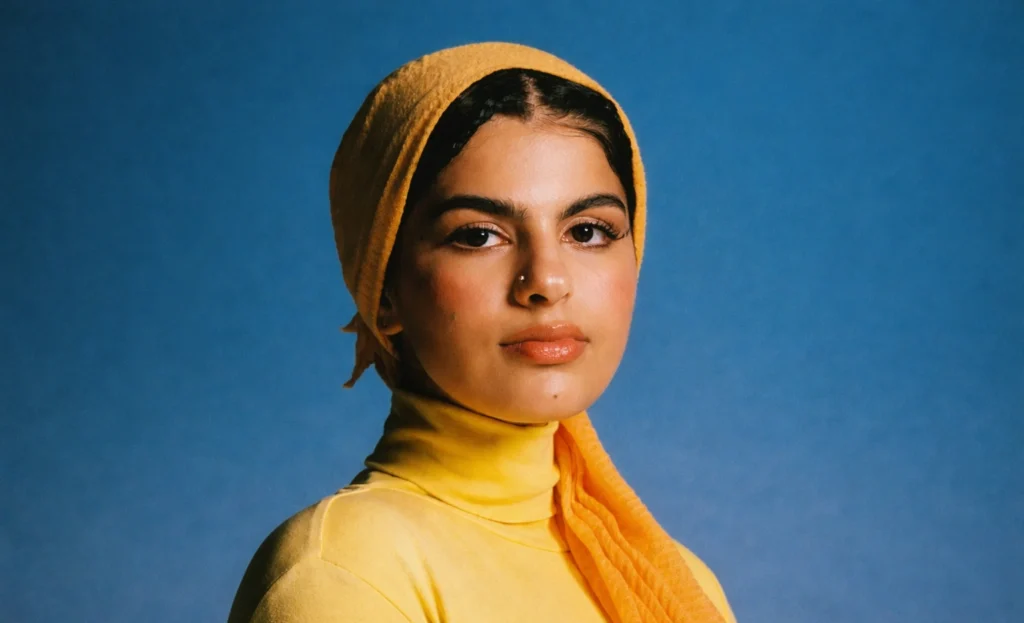
The Gilded CageSuhana Khan Stardom & The Burden Of The Name By Jane Stevens Suhana Khan does not merely enter the Indian film industry; she steps into a spotlight that has been intensely focused on her since birth. As the daughter of Shah Rukh Khan, often referred to as the “Badshah of Bollywood” and the industry’s biggest outsider success story, her career is immediately weighed down by extraordinary expectations and the unrelenting scrutiny that accompanies her lineage. Her debut is not just a personal milestone; it’s a public phenomenon collision of Bollywood royalty and the contemporary debate surrounding nepotism and privilege. Her journey is a fascinating case study in modern stardom, where a well-prepared star child, with an undeniable interest in acting and formal training, must navigate a landscape where her opportunities are a source of both immense advantage and harsh criticism. Suhana Khan’s entry into mainstream cinema was orchestrated through one of the most significant debut vehicles in recent memory: Zoya Akhtar’s The Archies, a 2023 Indian Hindi-language teen musical film based on the iconic Archie Comics. The Netflix film, set in 1960s India, was a massive launchpad not only for Suhana, who played Veronica Lodge, but also for two other major industry grandchildren: Agastya Nanda (Amitabh Bachchan’s grandson) and Khushi Kapoor (Sridevi and Boney Kapoor’s younger daughter). This collective debut amplified the spotlight and, inevitably, the scrutiny. Before The Archies, Suhana had diligently pursued training and practical experience. She studied acting at the New York Film Academy (NYFA) in their 1-Year Acting for Film degree program, graduating in 2016. Her earlier work included the 2019 short film The Grey Part of Blue, where she played the lead role of ‘Sandy,’ a young woman navigating a two-day road trip. This short film garnered appreciation from viewers who were impressed by her acting skills, suggesting a genuine talent and dedication that predated her major feature film debut. The pre-production for The Archies was rigorous. Director Zoya Akhtar revealed that the entire cast, including the debutants, underwent extensive acting workshops, dance, singing, swimming, and cycling boot camps. Akhtar’s goal was to ensure the cast was comfortable on set and well-prepared for the “daunting” task of performing in front of a camera and crew, a testament to the fact that even those with the greatest privilege are expected to meet a high bar of professionalism. Suhana even made her singing debut with the film’s song ‘Jab Tum Na Theen,’ further showcasing her commitment to the musical. The Double-Edged Sword of the Name The central conflict of Suhana Khan’s early career is the inescapable shadow of her father’s legacy. Shah Rukh Khan is the quintessential outsider who made it to the top through sheer hard work and talent. The irony is stark: the daughter of the industry’s biggest self-made star is now the target of the very nepotism debate that the audience uses to uphold its own narrative. The public’s reaction to her every move, from her first magazine cover for Vogue India at age 18 to her latest commercial advertisements, is a torrent of praise and unforgiving criticism. The Criticism Netizens and critics alike are quick to accuse her of receiving opportunities solely due to her parentage, often citing a lack of “credible achievements” to justify her high-profile projects. Following The Archies’ release, she was trolled with many calling her a “bad actress” or questioning her training, and for subsequent work, she faced strong criticism for having “negative screen presence” or “no charisma,” suggesting her star power was overshadowed by background actors. This level of immediate, global judgment is an unprecedented challenge for a newcomer. The Pressure The pressure on a star child is often described as insurmountable. She must not only succeed on her own merit but is implicitly expected to surpass her father’s stature to carve out a meaningful place in the industry. As one commentator noted, star children who enter the profession are “broadcasting their worst failures on a public stage when you know you will never match up to your parents’ stature.” This pressure is acknowledged even by those close to the production. Zoya Akhtar advised Suhana and the other debutants to “roll with the punches, keep their heads down and work hard,” noting that while they can’t control what people say, if they excel at their job, they will be unstoppable. The pressure is also generational; her mother, Gauri Khan, shared the teaser for The Archies with the simple but profound message: “You did it.” The criticism faced by Suhana Khan extends beyond her acting ability and into deeply personal and sensitive areas. She has been the target of relentless online trolling, with some comments focusing on her skin color, using slurs, and feeding into India’s deep-seated issue of colourism. Suhana has not taken this harassment silently. She publicly addressed the trolls, stating she was told she was “ugly because of my skin tone, by full-grown men and women, since I was 12 years old.” She used her platform to lament that “this isn’t just about me, it’s about every young girl/boy who has grown up feeling inferior for absolutely no reason,” ending her post with the hashtag #endcolourism. In dealing with the constant barrage of online negativity, Suhana has revealed a strategy of “compartmentalization,” a method of creating mental isolation to separate the criticism from her professional and personal growth. She had previously noted, “I keep telling myself that haters are going to hate, but I can’t honestly say that I don’t get upset by it. It’s annoying, but I keep telling myself other people have bigger problems.” This psychological approach is necessary for any public figure but is particularly crucial for a young debutante under such intense, high-stakes examination. Despite the mixed reviews for her debut and the continuous scrutiny, Suhana Khan is determined to build her career. Her future path is already being paved with significant projects. She is reportedly set to star alongside her father, Shah Rukh Khan, in an action thriller titled King, directed by Sujoy Ghosh. She is speculated to play the role of a spy with her father as her handler. She has also become the face of major brands like Maybelline

Scroll to Top