Magnav MENA

Top Stories

Queen Rania A Global Cultural Ambassador
Lifestyle, Top Stories

Queen Rania, A Global Cultural Ambassador

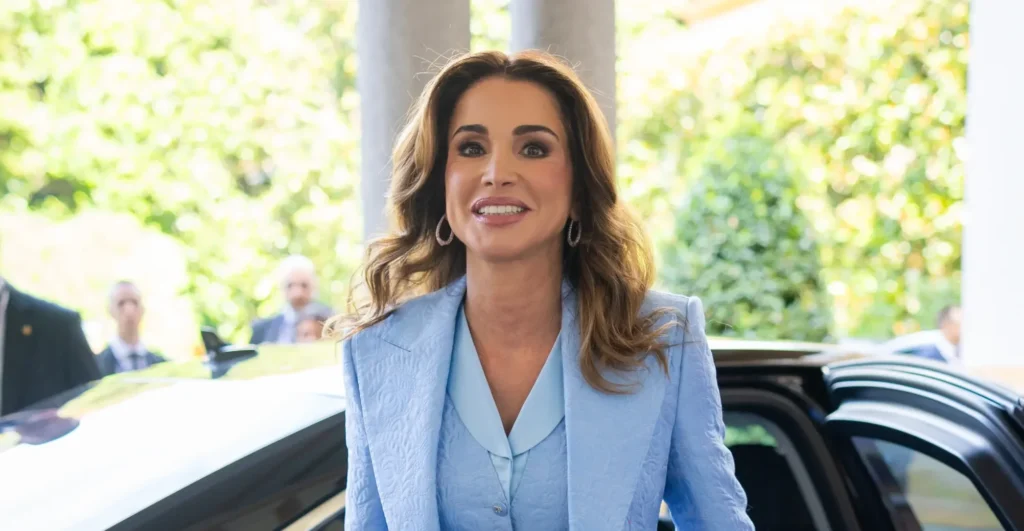
Queen Rania A Global Cultural Ambassador By James Wood Her Majesty Queen Rania Al Abdullah of Jordan is celebrated across the world as a modern and influential royal, but what truly defines her global presence is her unwavering dedication to dialogue, cultural exchange, and mutual understanding. While her advocacy encompasses education, women’s empowerment, and humanitarian relief, the unifying thread that runs through all her endeavors is a profound belief that empathy across cultural boundaries is not only desirable but essential for global stability and progress. Queen Rania has long recognized that stereotypes and misconceptions create barriers to peace, and she has consistently used her international platform to address and dismantle the negative narratives surrounding Arabs and Muslims. At a time when few leaders were willing to directly engage in such discussions, she embraced the transformative potential of digital media, becoming one of the first royals to use YouTube as a tool for global dialogue. Through this platform, she invited people from all walks of life to question their assumptions, to see the Middle East with fresh eyes, and to connect with its culture on a more personal level. This step illustrated her modern approach to cultural diplomacy, moving beyond formal speeches and official visits to create conversations that resonate with individuals on a human scale. Her initiatives have never been confined to defending a single culture. Instead, she promotes a vision of acceptance, tolerance, and respect that transcends borders. In international forums, she continues to emphasize that cross-cultural and interfaith dialogue is not a luxury but a necessity, a foundation for tackling some of the most pressing global issues of our time. For Queen Rania, the path to peace and cooperation lies in embracing diverse perspectives and recognizing that our common humanity is always greater than our differences. Nurturing a Culture of Learning At home in Jordan, Queen Rania places education at the heart of national transformation. She sees it as the single most powerful tool for empowerment and as the most effective safeguard against extremism and inequality. Her vision is made tangible through the Queen Rania Foundation for Education and Development, which spearheads ambitious initiatives designed to reimagine learning for future generations. Among its most notable projects is the Queen Rania Teacher Academy, which works to elevate the teaching profession by equipping educators with advanced training and resources, thereby raising the standards of classroom instruction across the country. Another groundbreaking initiative, Edraak, provides millions of learners across the Arab world with free access to high-quality online courses in Arabic.  These platforms are not merely about providing education, but about fostering a culture of curiosity, innovation, and lifelong learning that will allow Arab youth to compete and thrive in an increasingly interconnected world. Preserving Heritage and Empowering Communities Queen Rania’s work also highlights the importance of heritage as a living, dynamic force that sustains both cultural identity and economic resilience. Through the Jordan River Foundation, established in 1995, she has created opportunities for families and communities to improve their livelihoods while preserving Jordan’s rich traditions. The foundation supports projects such as Jordan River Designs, which empowers local women to produce exquisite handicrafts rooted in tribal artistry, weaving, and embroidery. These initiatives achieve more than economic development. They allow women to gain financial independence, to contribute meaningfully to their households, and to step into roles of leadership within their communities. At the same time, they ensure that the ancient crafts and techniques of Jordan are not lost to modernization but are instead revitalized as symbols of cultural pride and sustainability. In Queen Rania’s vision, heritage is not something to be placed behind museum glass, but a living tradition that continues to shape identities and futures. A Global Voice for Empathy Ultimately, Queen Rania’s legacy rests on her ability to speak the language of empathy in ways that resonate globally. She has authored children’s books, such as The Sandwich Swap, which teaches young readers about friendship and overcoming prejudice, subtly instilling values of acceptance at an early age. She has also been a tireless advocate for refugees, reminding the world that behind every statistic lies a human story deserving of dignity and compassion. Her influence is rooted in her ability to connect the local with the global, weaving Jordan’s unique story into the broader narrative of shared humanity. By combining her royal platform with meaningful grassroots action, Queen Rania has enriched the lives of countless individuals while positioning herself as one of the most respected cultural ambassadors of our era. She embodies the conviction that dialogue is not an abstract concept but a transformative force, and that a better, more peaceful world begins when people are willing to listen, to learn, and to embrace one another.

Elie Saab
Lifestyle, Top Stories

la Nouvelle Cour Elie Saab’s Regal Reinvention

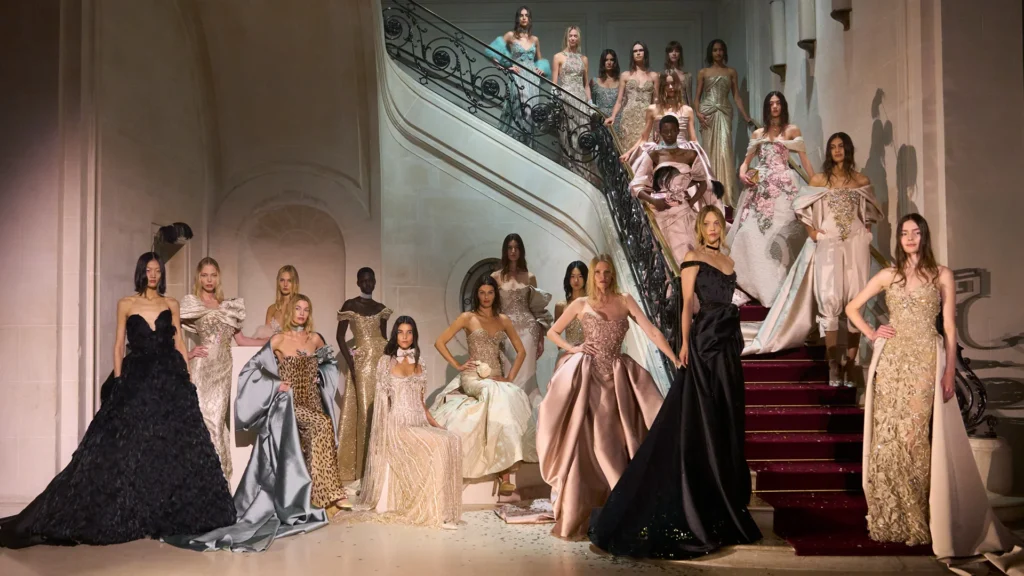
la Nouvelle Cour Elie Saab’s Regal Reinvention By Magnav Editorial Desk Elie Saab’s Autumn, Winter 2025, 26 Haute Couture collection, aptly titled La Nouvelle Cour, ushered in a glorious new era of high drama, a stunning vision for the contemporary, audacious woman. Staged within a Parisian salon privé, the presentation was a masterclass in fusing historic aristocratic elegance with unapologetic modern glamour, offering a sumptuous playground for the modern queen who crafts her own rules.  The Lebanese couturier, known for his timeless romance, delivered a powerful statement on strength and femininity, confirming his reign at the pinnacle of glamour, an impressive feat for any season. This collection acts as a sartorial decree, announcing the arrival of a new societal elite, women who possess both grace and an irreverent attitude, defining their status through style, not just lineage. The initial tableau set a tone of silent reverence, as a coterie of newcomers, radiant in sumptuous silks and adorned with lustrous pearls, swept through the door, embodying the spirit of the new muse, elegant and utterly captivating. The core narrative of the collection revolves around sculptural sophistication, an intense focus on architectural construction and sensual detailing. The silhouettes spoke volumes, quite literally, incorporating unexpected structure and theatrical movement. French corsetry, a traditional element of constraint, was boldly reimagined as an intimate embrace of power, a strong gesture of seduction, celebrating the female form in its most commanding iteration.  We saw these showstopping pieces ribbed with rich ebony velvet, intricately sculpted into shimmering metallic masterpieces, or paired expertly with flirtatious cascades of lace. The corsets were not merely underpinnings, they were external armor, symbols of confidence and strength. Beyond the bodice, the meticulous tailoring emphasized a hyperfeminine hourglass form, celebrating the body with confidence, a subtle wink of seduction that permeated every look.  The construction brilliance continued in the incorporation of voluminous fabrics, notably moiré sheaths, which added drama and textural interest. These were draped artfully to either reveal a calculated flash of skin, offering a moment of unexpected sensuality, or to cinch the waist with pronounced, theatrical flair, ensuring grandeur was never an afterthought. Layered velvets were utilized to create structure and a regal weight, softening the intensity of the volumes while maintaining the dramatic shape.  Wide, flowing skirts provided a majestic backdrop for the meticulous detail of the upper half, allowing the wearer to move with undeniable presence, commanding attention with every sweep of fabric, a true testament to haute couture’s raison d’être, dressing women for maximum impact. The unforgettable palette anchored the collection, moving gracefully between soft femininity and imperial depth, a duality that speaks to the modern queen’s complex identity.  Macaron hues, including delicate nude, serene rose pink, calming water blue, and subtle mint, provided a sweet, airy contrast to the collection’s heavier, richer tones, a subtle nod to the Rococo lightness of historic Parisian courts, but executed with modern shimmer and transparency. This delicate side of the spectrum represented the dreamlike, romantic essence for which Saab is globally celebrated. Conversely, imperial black and molten gold stood in regal opposition, adding necessary gravity and opulence to the eveningwear segments, perfectly capturing the midnight magic of nocturnal revelry. These darker shades were often rendered in lush velvets and highly polished metallic brocades, amplifying their luxurious feel and creating a striking visual tension against the pastels. Embellishments were lavish, always elegant, showcasing the unparalleled hand, craftsmanship of the Saab atelier. Rich embroidery, often requiring hundreds of hours of painstaking work, elevated the fabrics into masterpieces.  Lush floral bouquets, rendered in crystals and micro sequins, bloomed across both brocade and sheer tulle, injecting romantic vibrancy and depth. These designs resembled fine Parisian patisserie, rococo designs translated into tactile, luminous surfaces. Glittering embellishments illuminated by hidden cascades of light allowed individual stones to stand proudly against the muted colors of the base fabric.  Perhaps the most unifying motif was the bow, abundant and artful, symbolizing feminine delicacy and playfulness. It appeared intricately beaded onto sheer chiffon, giving the illusion of floating motifs, or dramatically billowing at the back of feathered gowns, weaving a spell of captivating mystery, inviting an undeniable reverence, a final touch of perfect maximalism. The accessories were designed to complete this vision of modern royalty. The transition to nocturnal revelry was marked by shoulders cloaked in floor, skimming velvet capes, pieces that guaranteed a breathtaking entrance and exit, echoing the drama of traditional royal dressing. Exquisite bags, extending Elie Saab’s signature craftsmanship into the domain of couture accessories, were carried with poise.  The collection reached its spectacular climax with the bridal look, a vision of queenly grandeur. The bride, a queen among queens, was adorned in an ornate gown richly embroidered in moonlit floral motifs, an artwork in white and pearl. This magnificent centerpiece was crowned with an extravagant overskirt in tones of shimmering pearl, symbolizing effortless royalty and ultimate power. This collection, La Nouvelle Cour, is more than just clothing; it is a timeless expression of feminine grace, beautifully handcrafted and rich with precious embellishment. It successfully summons an enchanting realm where pleasure, power, and sophisticated playfulness rule the court, cementing Elie Saab’s status as the undisputed sovereign of red, carpet ready couture, a masterful, resonant seasonal showing, a collection destined for history books, not just the runway.

RAHMA RIAD
Lifestyle, Top Stories

Rahma Riad, The Voice Of Strength & Emotion In Modern Arab Music

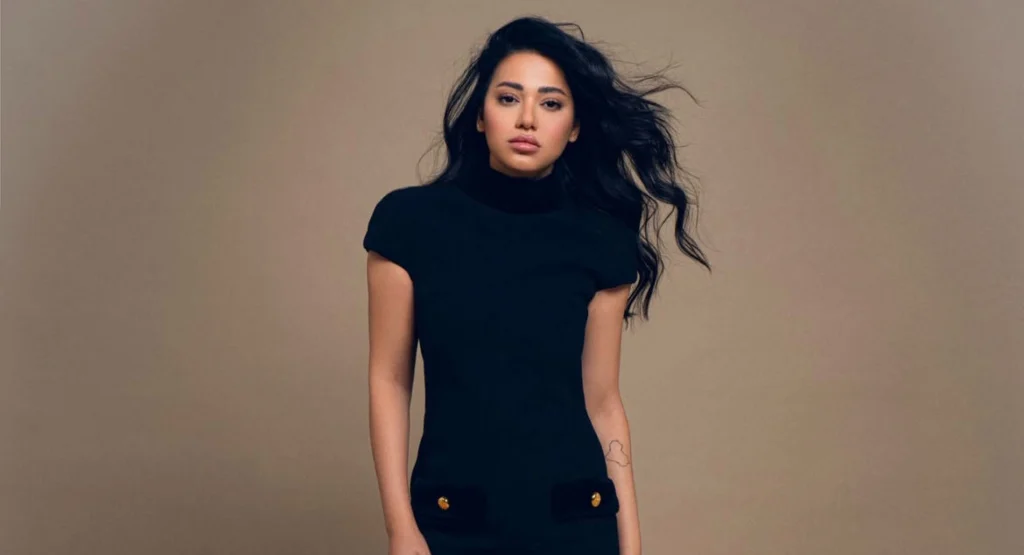
Rahma Riad The Voice of Strength & Emotion In Modern Arab Music By Peter Davis In the ever-evolving world of Middle Eastern music, few artists have managed to capture the hearts of millions with the same grace, persistence, and emotional authenticity as Rahma Riad. With a voice that moves effortlessly between soulful vulnerability and commanding strength, Rahma has carved out a unique place for herself in the industry. Her latest release, Min El Akher, marks not just another addition to her discography but a powerful statement of artistic intent. Through music, presence, and resilience, Rahma Riad has become one of the most admired voices of her generation, inspiring audiences across the Arab world and beyond. Rahma Riad, born Rahma Abdulredha Mezher Al-Sibahi in 1987 in Basra, Iraq, inherited her love of music from her father, the late Iraqi singer Riad Ahmed. From an early age, she was immersed in melodies, rhythms, and the emotional storytelling that defines Arabic music. Watching her father perform and absorbing the artistic atmosphere of her home shaped her identity as an artist. It was clear even in her childhood years that Rahma was destined to follow in his footsteps, but with her own style and vision. Her first steps into the spotlight came through regional talent shows, most notably Star Academy in 2010. The competition introduced her to a broad audience, and her expressive performances quickly made her a fan favorite. She reached the finals, and while she did not take home the winning title, she left with something far more valuable: recognition, credibility, and a loyal fanbase. That exposure set the foundation for her future career, proving that her potential extended far beyond television screens. Rahma’s journey after Star Academy was not without challenges. Like many young artists, she had to navigate the complexities of the music industry, balancing commercial expectations with her own artistic instincts. Yet, she demonstrated resilience and clarity of purpose, steadily building her career through carefully chosen songs and collaborations. Her breakthrough came with Waed Menni, a ballad that resonated deeply with audiences. The track, with its heartfelt lyrics and unforgettable melody, went viral, accumulating millions of views and establishing Rahma as a true star. It remains one of her most celebrated works and a turning point in her artistic journey. Following that success, Rahma diversified her musical style. She experimented with different dialects, explored contemporary pop, and fused her sound with traditional influences. Songs like Athadakom and Al Kawkab showcased her versatility, proving that she could adapt her voice to different genres while retaining her distinctive identity. She became a household name not just in Iraq but across the Gulf, the Levant, and the wider Arab diaspora. Her appeal lies not only in her music but in her persona. Rahma presents herself as strong yet approachable, glamorous yet grounded. She is a performer who commands attention on stage but also someone who shares her struggles, joys, and reflections openly with her fans. This duality makes her relatable while maintaining her status as an icon. In a region where women in the arts often face heightened scrutiny, Rahma’s ability to stand tall with grace and authenticity has made her an inspiration to many. Her role as a judge on Iraq Idol further expanded her influence. Taking her place at the judging table, she brought not only credibility but also compassion. Viewers praised her for her sincerity and encouragement toward young talent. In doing so, Rahma stepped into a mentorship role, giving back to the very platform that once propelled her career. This gesture highlighted her belief in nurturing the next generation of artists while reinforcing her position as a cultural leader. Rahma’s latest release, Min El Akher, carries a deeper meaning than simply being another hit single. The phrase translates to “straight to the point” or “from the end,” and the song reflects a no-nonsense clarity in both its lyrics and delivery. It resonates as a declaration, a refusal to waste words, and a bold assertion of her independence. Through this track, Rahma communicates her strength and honesty, connecting with listeners who appreciate her straightforwardness. The song is not only musically captivating but also symbolic of where she stands today, fearless, self-assured, and unapologetically authentic. As with much of Rahma’s work, Min El Akher blends artistry with emotion. Her vocal delivery strikes a balance between softness and power, a duality that mirrors the themes of love, truth, and empowerment present in her music. Listeners find in her songs pieces of their own lives, whether it’s heartbreak, resilience, or celebration. This ability to turn personal emotion into a universal experience is what makes Rahma more than just a singer; she is a storyteller of modern Arab life. Looking ahead, Rahma Riad’s career shows no signs of slowing down. With a loyal fanbase that spans across the Middle East and beyond, she is poised to continue pushing creative boundaries. Her adaptability allows her to thrive in an industry that constantly shifts with new trends, while her grounding in tradition ensures her music maintains a timeless appeal. Potential future collaborations with international artists could broaden her influence further, bringing her voice to global audiences who may be less familiar with Arabic music but are drawn to her universal message of emotion and authenticity. Rahma Riad is more than an artist; she is a symbol of perseverance, strength, and authenticity. From her beginnings in Basra to her rise as one of the most celebrated female singers in the Arab world, she has proven that success is built on talent, resilience, and the courage to be true to oneself. Her music continues to resonate because it is honest, heartfelt, and deeply human. With Min El Akher adding a new dimension to her story, Rahma stands today as a voice of her generation, inspiring not only through her songs but through the example she sets. As she continues to shape the future of Arab music, Rahma Riad remains a beacon of artistry, empowerment, and emotional truth.

Scroll to Top